Unconventional Life – Podcast, Blog, Live Events

Category: Business

  • Ep279: The Strength of Being You with Travel Influencer Christina Galbato

    Ep279: The Strength of Being You with Travel Influencer Christina Galbato

    With social media being a massive platform for interaction, it wouldn’t be surprising for someone to want to be an influencer. But with so many established people in the industry, where do you even start? Online Educator and travel influencer Christina Galbato says that it’s about knowing your niche.

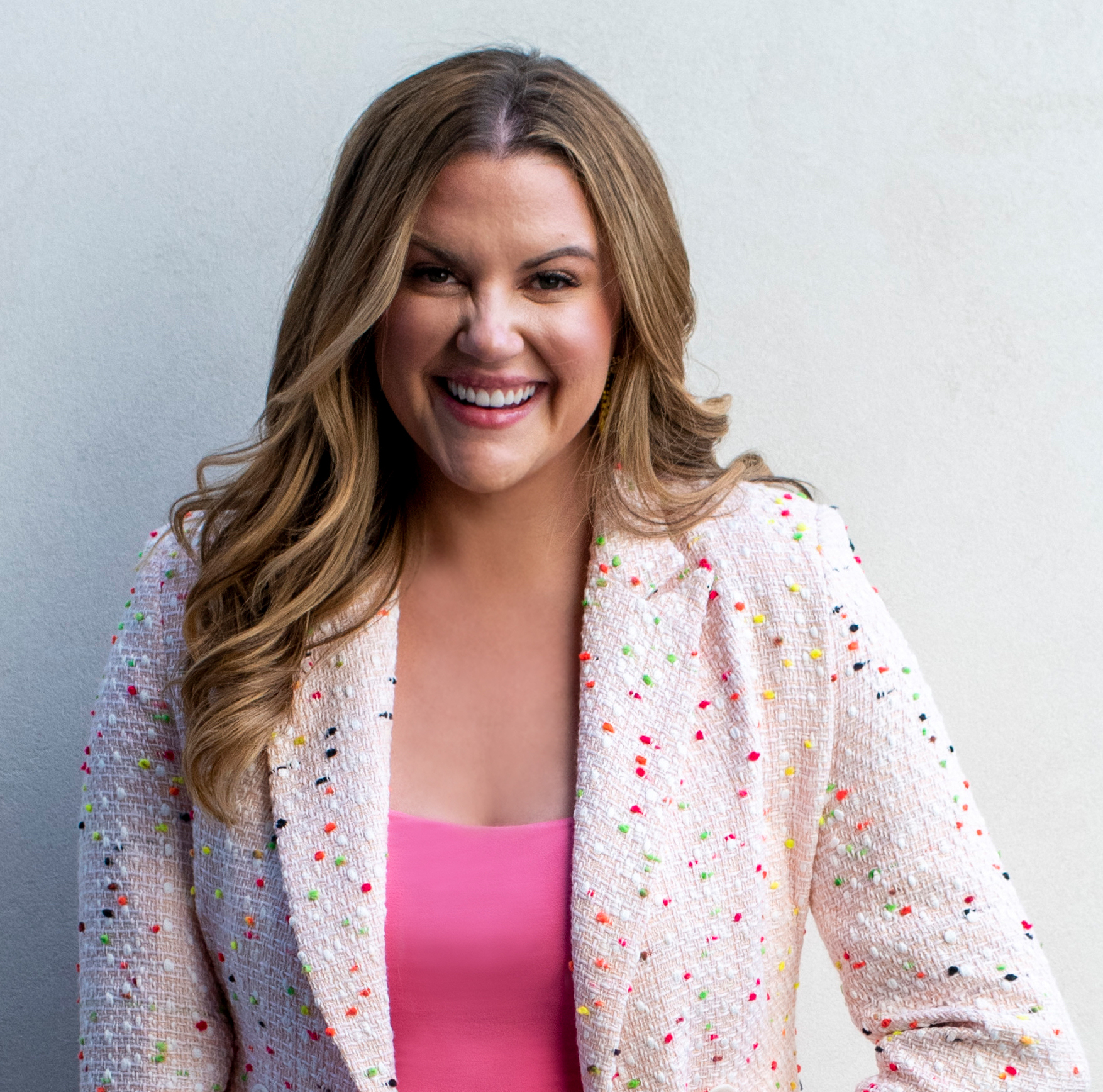
    Christina Galbato is a social media influencer, online educator, and digital marketing expert. After building a successful career as a travel influencer and working with brands like Ritz-Carlton, Mazda, and lululemon, Christina pivoted into online education. She built a 7-figure business helping thousands of women build careers influencers & bloggers. She has been featured in CNN and Forbes and was a speaker at AdWord 2020. She is also the host of the top-rated entrepreneurship podcast Her Life By Design.

    Many would argue that boxing yourself into a single area would limit the things you want to do, but as Christina proposed “it just makes your content easier to reach.” Finding a niche to base your content on helps you establish the influencer you want to be.

    “I always recommend that people get as specific as possible at the beginning of growing your page.”

    She pointed out that planning your niche “overlaps between what you’re passionate and excited about, and what you’re knowledgeable about.” Doing research on what other people post on your targeted niche, being tactical about your content, establishing a connection with your audience, and building your brand from your line of expertise is the first step towards success as an online influencer.

    “As an influencer, they (people) are looking for value; they’re looking for an industry expert to follow.”

    But what if after establishing a brand for yourself, you want to expand your content, and dive into topics outside your niche.

    Christina suggests that moving into new territory really depends on what you feel is best for yourself. She explains that, from experience, transitioning also means a change in your audience, but taking chances is part of the fun of influencing.

    “You know that cheesy quote that’s like ‘people are in your in your life for a reason, a season, or a lifetime.’” She continues, “It’s the same thing with Instagram followers. Your growth is going to come from putting yourself in those uncomfortable situations.”


    More from Christina:

  • Ep272: Leadership Beyond the Calendar with Volley Founder Josh Little

    Ep272: Leadership Beyond the Calendar with Volley Founder Josh Little

    With most of us still in lockdown and our offices empty due to the remote work set-up, leading a team and managing tasks has become a different type of exhausting. Serial entrepreneur and Volley CEO, Josh Little, refers to this as “Meeting Fatigue.”

    As the tech boss points out, there is no substitute for the human connection of being in the same place with your co-workers. Being in a group huddle or any project meeting has become this tiring task of listening to words rather than a sharing of ideas, and connecting. Little sees this as an obstacle to productivity and good leadership, but how can we get around this inescapable part of remote work?

    Josh says that we need these online conversations due to the current circumstances and leadership itself that needs to change.

    “The answer is not in talking less, but in talking differently.”

    With his fourth company Volley, they hope to create asynchronous conversations, similar to texting. As the name suggests, people will take turns in conversation, unlike in zoom where words are being thrown real-time while everyone else is on mute, Josh notes that this non-real time meeting provides a different environment and leadership.

    “This will let me take time to think about my response,” Josh explains “and allow me to skip back to what you said 2 or 3 times to really [understand] what you were trying to get across.”

    “By breaking the turns, it will also allow to be more inclusive and ultimately free-up your calendar,” Josh emphasizes,“and living beyond the calendar is what an asynchronous conversation can enable.”

    Having experience in different fields of business—including pickles—Josh notes that today’s environment requires “continuous leadership” where you can check in on demand.

    “The lightning-strike-eureka moment doesn’t happen when the calendar says it should,” he stresses, and that in this time when teammates are so distant from one another, is when leaders need to be exceptionally flexible.

    More from Josh:

  • Ep271: Building an Audience in a Competitive Industry, with NewReleaseToday President Kevin McNeese

    Ep271: Building an Audience in a Competitive Industry, with NewReleaseToday President Kevin McNeese

    Music is an art form that has lived the longest and has connected the most people. Breaking barriers and linking us together with a catchy tune and a moving beat, it’s a crowded industry that never fails to attract new young artists, and for NewReleaseToday president Kevin McNeese, it has been his mission and business to find an audience for these new voices.

    Starting his site NewRelease Today back in 2002, it has grown to be one of the largest Christian music platforms with over 400,000 monthly visitors and 167,000 subscribers to its newsletter. Working with dozens of mostly independent artists, he shares with us how much of the music industry has changed and what it takes to get an audience.

    Adding Gasoline to the Fire

    Compared to what was the system almost 20 years ago, artists had to rent a studio to make their music. Now some of the most famous clips on the Internet was recorded on a phone, or a computer with an improvised studio in the basement next to the washing machine.

    “Everybody can make music now so your product is no longer your music,” Kevin points out, “your product is now You and labels are not going to talk to you unless you are making noise.”

    “What kind of numbers and audience do you have following you? Who cares about your music? At this point, if you don’t have any of that, chances are labels not gonna pay attention.”

    Kevin notes that a label would give you a team to work with, and they can handle growing your audience while you focus on making your music, but there are other ways to build a team now, and nowadays an artist can do well on their own.

    Building Connections

    Working with his team on New Release Today, Kevin says that it has been both fun and challenging especially with all the online platforms of today that have really divided people.

    “Whether it’s an artist, or if you’re starting a community, you really have to show up in a lot of different places and that’s challenging,” Kevin points out. “And then each one of those places requires a different tone. What works on Instagram isn’t gonna work on YouTube or on Twitter and Facebook, it’s not gonna work on your own website.”

    Kevin puts an emphasis on connecting to the audience you want, which means putting out content regularly and putting your hopes on slow and steady growth.

    Starting Off with Passion

    When a giant such as the internet has been made so accessible to everyone, Kevin points out that the constant dedication to being ready every day is what makes the difference.

    “I’m passionate about it,” he says describing the business, “and that passion has never waned. My goal was to just connect as many people as I could find to as much great music that I could find, and that goal was there in 2002, as it is there today.”

    Kevin points out that he describes his work with air quotes, noting that it doesn’t feel like a job.

    With the same goal and passion, he founded ChristianArtist.Pro and the We Love Christian Music Awards to give independent artists the boost they need.

    Burning with passion and determined to be consistent, Kevin is still on the lookout for new talent and great music.

    More from Kevin

    Website: https://www.newreleasetoday.com/ 

    IG @newreleasetoday

  • Ep270: Three Hacks to The PageRank Algorithm and Growing Your Website’s Reach, with Ardor SEO founder Kris Reid

    Ep270: Three Hacks to The PageRank Algorithm and Growing Your Website’s Reach, with Ardor SEO founder Kris Reid

    Fresh off watching the Seaspiracy documentary, software engineer and Ardor SEO founder Kris Reid was thinking of making a donation to the Sea Shepherd organization to help the environment but he understood that there was more he could do.

    Just like how he helped Food for Life Global raise six figures last year, digital marketing could do more than what one donation could do.

    “Truthfully, I feel that if I get my message across to people, I’m doing them a service,” Kris says, “because I can help any business grow.”

    Following the lessons learned from 80/20: Sales and Marketing by Perry Marshall, Kris notes that all transactions involve risks, and taking away that risk through a well-designed strategy has increased their sales significantly. He simplifies this strategy to three parts that we can start right now.


    Beautiful websites don’t sell things, words do

    Before people can judge a book by its cover, they should know it exists first; Kris says when building a business in this digital space, web designers are the last of your priorities.

    “A website is like a business card,” he says, “you can have the most beautiful business card in the world but if it’s just sitting in your desk drawer, it doesn’t do anything. Same with your website, it needs to get in front of people’s faces, that’s a lot more important than being pretty.”

    He pushes for people to focus on Keyword Research; understand exactly who your customer avatar is and exactly what they’re searching for. Search how many people per month are searching each keyword and have that dictate everything you do—how you structure your website, write your content, and set your title tags.


    Build authority

    Kris tells us in layman’s term that “Google doesn’t trust new businesses.” He notes that new small businesses need to make sure that their website’s Code Quality is on point since the bar is set much higher for them.

    Here he highlights the importance of backlinks and those looking into increasing their website traffic should get as many of these as they can to increase their “credibility” in Google’s PageRank algorithm.


    Stick to your Queen Bee role

    Lastly, Kris advises that new business owners should organize where they put their efforts into and make sure they’re not wasting their limited resources. Learning from Profit First and Clockwork author Mike Michalowicz, he encourages people to leave certain areas to the experts.

    Like in a beehive, the queen has her role, and supporting bees around her have theirs. “Any form of marketing is hard,” Kris stresses, “whether Google AdWords, Facebook ads, or any of it, you can burn money really quick and you can screw it up really quick to. Work with a professional, get them to do it, and stick to whatever it is you do.”

    “Unless you want to be an SEO analyst, don’t learn SEO.” Kris reflects on his current role in the world, sharing that during coffee with his entrepreneur wife, they talk about how tiring it is to start new and more projects but he notes that creating more and building a bigger reach is how business owners are making a difference.


    More from Kris:

  • Ep266: Bars and Brainwaves, with Myndlift CEO and co-founder Aziz Kaddan

    Ep266: Bars and Brainwaves, with Myndlift CEO and co-founder Aziz Kaddan

    Growing up with a pediatric neurologist as the man of the house, it’s no surprise that neuroscience would be a common topic at the dinner table of Aziz Kaddan’s childhood, and why he found himself years later in the same branch of science.

    At an early age, he was exposed to the topic of mental health and conditions particularly ADHD. He witnessed how his two siblings were examined by their father, and how much they rejected the medication that he gave them. As research in neuroscience expanded over the decades and therapy improved, Aziz now finds himself as the CEO of Myndlift, and building on the breakthrough that is Neurofeedback.

    To simplify, Aziz explained that “Neurofeedback is based on something called Operant Conditioning. Whenever you do a certain action, you get a reward or a no reward, and if you get a reward immediately after doing that action, that action or that behaviour is being reinforced, right? So if you’re rewarding a baby, for example, whenever they do a specific behaviour over and over and over again, at some point they’re going to do that behaviour more and more naturally.”

    This was the culmination of the research put into measuring brain activity which allowed for the non-invasive undertaking of sending frequencies to parts of the brain, which paved the way for therapy that improved actions like focus and treat conditions that affect the brain like ADHD and depression.


    Starting the Start-up

    Despite its effectiveness, Aziz acknowledges that it is yet to go mainstream, “Other than the high costs associated with it, the need to visit the clinic so often made it something that is sort of a last resort for many people,” he says, “you would prefer to take medication rather than stick to 60-day training regimen with therapy.

    “I tried it myself and it helped me. I know the benefits of research, why is it not accessible? So we worked super hard on making it accessible by using wearable technology and mobile technology and just providing it from home.”

    It was this idea that led Aziz and his co-founders to quit their jobs in 2014 and fly from Tel Aviv to a technology accelerator in Boston. It was a difficult journey educating investors and it took almost 10 months of work to make the first dollar for their start-up, but they persevered.

    Now their compact Myndlift technology and software are being used in hundreds of clinics globally, inching their way closer to making this groundbreaking treatment a mainstream option in the field of mental health.


    Rhymes and Relaxation

    Having experienced the difficulties of being a new entrepreneur, Aziz encourages other dreamers, and aspiring CEOs to not forget about themselves in this painstaking process of growth, as their mental health is equally important as their goals.

    “At the end of the day,” Aziz says, entrepreneurs are very prone to suffer from depression or anxiety due to the difficulty of what they’re doing—you’re alone, you’re building something big. Every day is a struggle and you don’t have somebody telling you what to do—you have to figure it out by yourself, all of these factors can be daunting. For example, if you’re funding for a big idea, and you have, you fully believe in that idea, your mom also believes in it [but] when you go to investors and they tell you well this will never work, or you’re getting rejection after rejection after rejection that can take a toll on your mental health.

    Aziz shares that it’s hard to push through with projects when you’re dealing with internal burdens, so he suggests that from time to time, entrepreneurs take a day off to pursue other projects.

    “I really recommend to every single entrepreneur out there that are just starting out, have an artistic project, whether it’s singing, drawing—whatever it is, because when you have such a project where you create something, and you’re not dependent on people—vying for the market or investors and it’s just your creation that you fully control in your own world, on the weekend. It just gives you that break that you desperately need.”

    For Aziz, music and the lyrical world of rap was his part-time project outside Myndlift, and the CEO himself writes his own rhymes from time to time as his way of clearing his head.


    Science and Stigma

    Even though they have made treatment for mental health more accessible, Aziz acknowledges that the stigma of mental health treatment is still there. Many countries and parts of our communities are still associating it with disability and jumping to uneducated conclusions on the topic of mental conditions, but there are noticeable signs of acceptance in more areas.

    He says that during this time of COVID-19 where many of us are stuck at home, many are starting to see the importance of mental health.

    “[At times] I’m interviewing candidates who want to work at Myndlift and I’m noticing a lot of openness,” Aziz shares, “people are telling me ‘look I really connect with this company because I’ve suffered from a mental health issue, and I think I’m still suffering’ they know that I’m not gonna pass judgment. And so, that’s the beautiful thing that’s happening right now and I hope that this continues to grow.”


    More from Aziz and Myndlift: