Unconventional Life – Podcast, Blog, Live Events

Category: Wellness

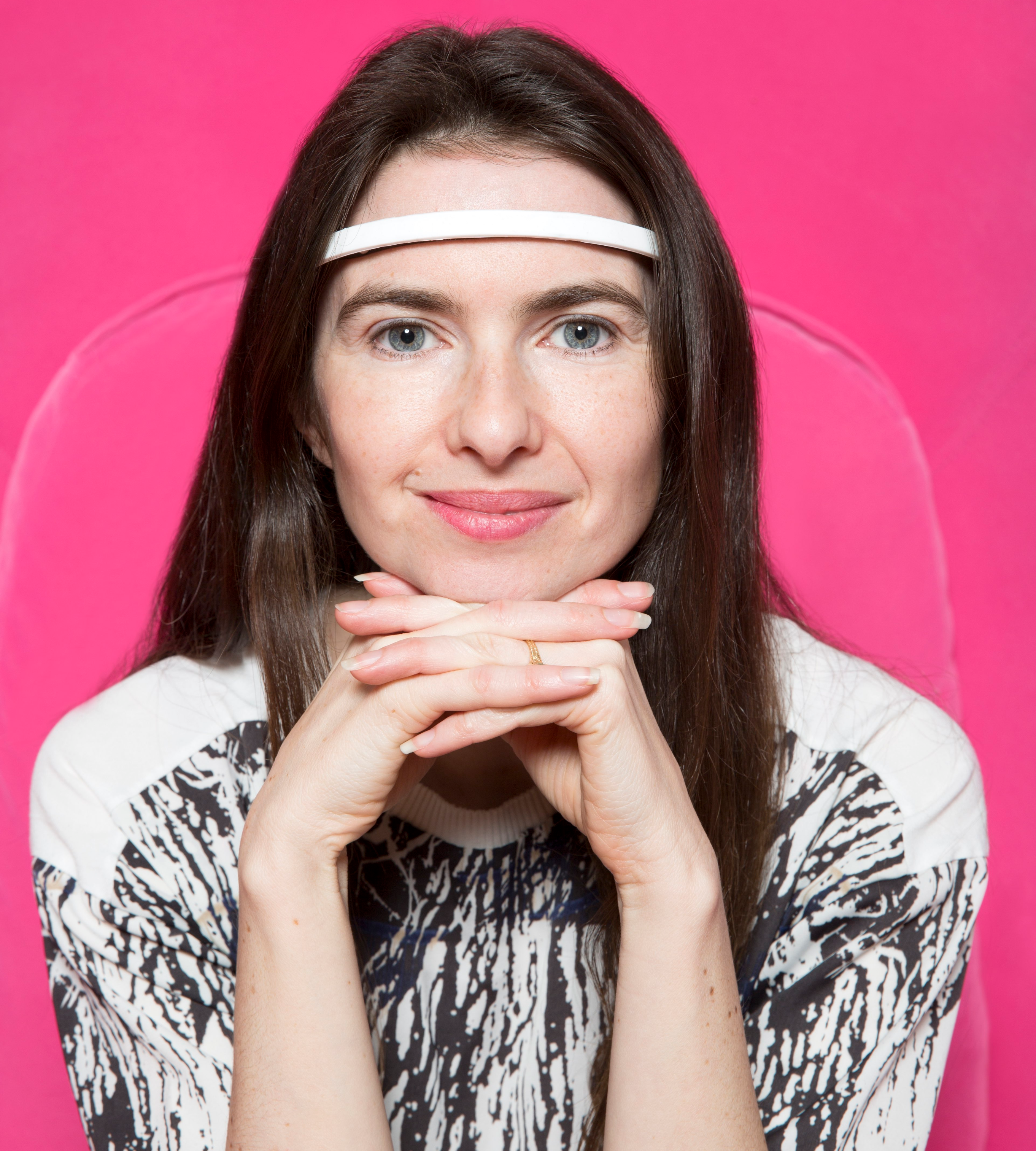
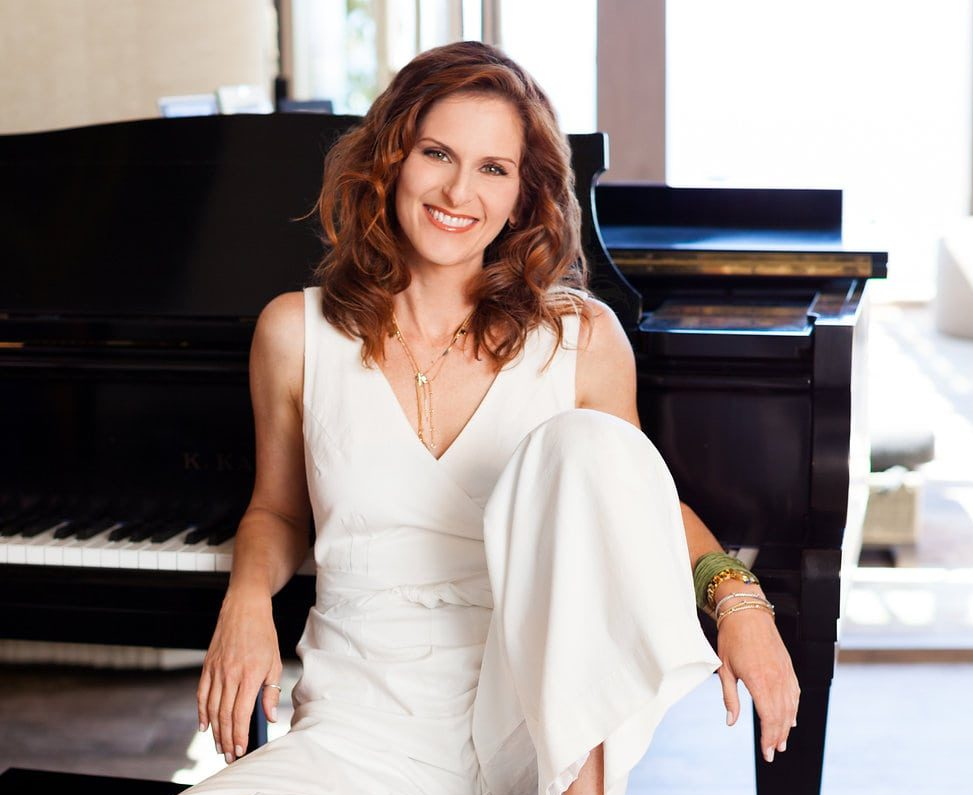
  • Ep268: Creating a New Identity, with Holistic Nutritionist and Hypnotherapist Melissa Kathryn

    Ep268: Creating a New Identity, with Holistic Nutritionist and Hypnotherapist Melissa Kathryn

    We know ourselves more than anyone, and often we need to be reminded to take our time to listen to our own thoughts. In our talk with Certified Nutritionist and Hypnotherapist Melissa Kathryn, she takes us for a quick meditation session and guides us to “let the answers in” as our conscious thoughts step back and we ask our bodies about how to solve our fears.

    Melissa shares with us the MK method which she has been following and teaching people in order to change their lives, whether it be an issue with weight, diet, or general emotional and trauma healing. She describes it as a holistic approach that really strikes a problem to its core.

    “MK method is about creating a new identity and understanding what your gaps are,” Melissa said, “something that I teach is where there’s lack, you’ll fill the gaps with x. [For example] where there is lack, you’ll fill the gaps with food. So, wherever we experience lack within ourselves, and within our thinking and within our being, knowing that we’re not enough now, we will end up filling those gaps with whatever it is.”

    For Melissa, change isn’t simply about education and health, it’s also about empowerment; she points out that our actions are dictated by our minds and these decisions affect our body and how we live our lives. Sharing her own story, Melissa notes that even as a nutritionist she still bounces back to unhealthy routines.

    “I got the weight back at the same length of time I took to get it off,” she says “so clearly something’s missing. And I was just on the floor of my New York City apartment, binging on Quest Bars, felt sick to my stomach. I was like why would I do this to myself? This clearly [shows] I don’t love myself because I’m putting myself in pain and I’m not living my best life.

    “I started really looking at my mind and started realizing that all of this had nothing to do with food but my relationship to myself and my mindset.”

    She shares that the beauty of her work is when she gets to empower women through her coaching and her story of surviving cancer but she notes that people also need to realize that they can look within to find their own answers and be their own inspiration.

    “You don’t need an astrological reading to tell you that your desires on your heart are meant for you,” she stresses, “you got to give yourself permission to live your best life now.”


    More from Melissa:

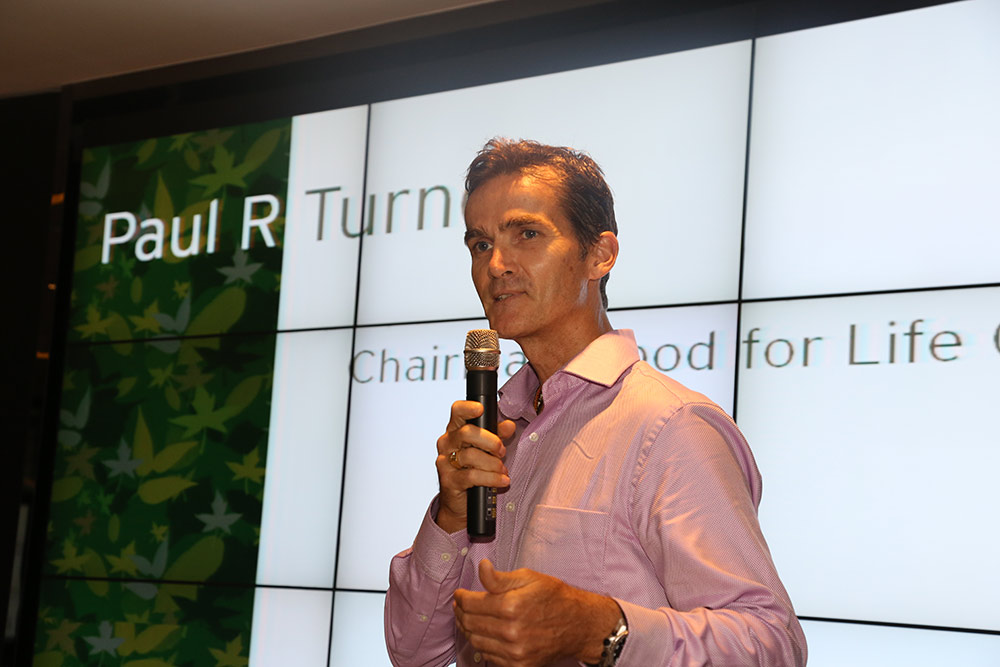
  • Ep266: Bars and Brainwaves, with Myndlift CEO and co-founder Aziz Kaddan

    Ep266: Bars and Brainwaves, with Myndlift CEO and co-founder Aziz Kaddan

    Growing up with a pediatric neurologist as the man of the house, it’s no surprise that neuroscience would be a common topic at the dinner table of Aziz Kaddan’s childhood, and why he found himself years later in the same branch of science.

    At an early age, he was exposed to the topic of mental health and conditions particularly ADHD. He witnessed how his two siblings were examined by their father, and how much they rejected the medication that he gave them. As research in neuroscience expanded over the decades and therapy improved, Aziz now finds himself as the CEO of Myndlift, and building on the breakthrough that is Neurofeedback.

    To simplify, Aziz explained that “Neurofeedback is based on something called Operant Conditioning. Whenever you do a certain action, you get a reward or a no reward, and if you get a reward immediately after doing that action, that action or that behaviour is being reinforced, right? So if you’re rewarding a baby, for example, whenever they do a specific behaviour over and over and over again, at some point they’re going to do that behaviour more and more naturally.”

    This was the culmination of the research put into measuring brain activity which allowed for the non-invasive undertaking of sending frequencies to parts of the brain, which paved the way for therapy that improved actions like focus and treat conditions that affect the brain like ADHD and depression.


    Starting the Start-up

    Despite its effectiveness, Aziz acknowledges that it is yet to go mainstream, “Other than the high costs associated with it, the need to visit the clinic so often made it something that is sort of a last resort for many people,” he says, “you would prefer to take medication rather than stick to 60-day training regimen with therapy.

    “I tried it myself and it helped me. I know the benefits of research, why is it not accessible? So we worked super hard on making it accessible by using wearable technology and mobile technology and just providing it from home.”

    It was this idea that led Aziz and his co-founders to quit their jobs in 2014 and fly from Tel Aviv to a technology accelerator in Boston. It was a difficult journey educating investors and it took almost 10 months of work to make the first dollar for their start-up, but they persevered.

    Now their compact Myndlift technology and software are being used in hundreds of clinics globally, inching their way closer to making this groundbreaking treatment a mainstream option in the field of mental health.


    Rhymes and Relaxation

    Having experienced the difficulties of being a new entrepreneur, Aziz encourages other dreamers, and aspiring CEOs to not forget about themselves in this painstaking process of growth, as their mental health is equally important as their goals.

    “At the end of the day,” Aziz says, entrepreneurs are very prone to suffer from depression or anxiety due to the difficulty of what they’re doing—you’re alone, you’re building something big. Every day is a struggle and you don’t have somebody telling you what to do—you have to figure it out by yourself, all of these factors can be daunting. For example, if you’re funding for a big idea, and you have, you fully believe in that idea, your mom also believes in it [but] when you go to investors and they tell you well this will never work, or you’re getting rejection after rejection after rejection that can take a toll on your mental health.

    Aziz shares that it’s hard to push through with projects when you’re dealing with internal burdens, so he suggests that from time to time, entrepreneurs take a day off to pursue other projects.

    “I really recommend to every single entrepreneur out there that are just starting out, have an artistic project, whether it’s singing, drawing—whatever it is, because when you have such a project where you create something, and you’re not dependent on people—vying for the market or investors and it’s just your creation that you fully control in your own world, on the weekend. It just gives you that break that you desperately need.”

    For Aziz, music and the lyrical world of rap was his part-time project outside Myndlift, and the CEO himself writes his own rhymes from time to time as his way of clearing his head.


    Science and Stigma

    Even though they have made treatment for mental health more accessible, Aziz acknowledges that the stigma of mental health treatment is still there. Many countries and parts of our communities are still associating it with disability and jumping to uneducated conclusions on the topic of mental conditions, but there are noticeable signs of acceptance in more areas.

    He says that during this time of COVID-19 where many of us are stuck at home, many are starting to see the importance of mental health.

    “[At times] I’m interviewing candidates who want to work at Myndlift and I’m noticing a lot of openness,” Aziz shares, “people are telling me ‘look I really connect with this company because I’ve suffered from a mental health issue, and I think I’m still suffering’ they know that I’m not gonna pass judgment. And so, that’s the beautiful thing that’s happening right now and I hope that this continues to grow.”


    More from Aziz and Myndlift:

  • Ep264: Choosing Peace Amidst Chaos, with The Angel Coach, Emily Rivera

    Ep264: Choosing Peace Amidst Chaos, with The Angel Coach, Emily Rivera

    To say that 2020 was a rough year would be an understatement, and 2021 hasn’t been exactly the year where the rainbow has appeared after the storm, however with everything that we’ve lost we’re encouraged to not just cry over the confusion and pain brought by the pandemic but also value that which stayed—treasure the things that 2020 didn’t take away.

    “Love and gratitude are the same frequency; they’re just labelled differently by the human mind,” that is according to influencer and Angel Coach Emily Rivera. Having met her first master at the age of five, she is constantly visited by Divine manifestations who show her visions and messages that she shares with others. She is now teaching others to listen to the guides—she refers to as the Saints of Light—to see beyond the panic and experience clarity in their life.

    Being also a mother to a daughter with a disability, her strength was tested when her child had a medical episode that stopped her breathing and sent Emily to intense panic.

    As the medical staff moved to make an incision on the girl, Emily saw the moment slow down to almost a halt and felt energy shower her at that moment.

    “I felt very lost in that moment,” Emily said, “like I can’t survive this and that energy moved down and I remember hearing this beautiful whisper: ‘You can choose to feel the peace that’s here now’. And at that moment I was being reminded that even though there was chaos—and I felt the chaos and I was in that chaos and I was witnessing the chaos and feeling it and being completely in it—I still had a choice to see the peace”

    As she took her daughter’s hand to her heart and said that she chooses peace, the doctors declared a miracle and the girl started breathing again.

    She learned from her guides that people are far more than what we see; more than just humanity “We are this vastness of light and impossibilities” and everyone shares the same divinity as them.

    “They’re just a reflection of who we are, that if I can take my human skin off and I could just be free from the idea that I’m human, I would see the same presence that was standing in front of me as myself.”

    Using her platform, Awakened Superhuman, she collaborates with other educators and teaches others to listen to their guides and be more comfortable in saying “Yes” because as it was told to her, “You are inevitable.”

    Despite how dark these past days may have been, Emily still encourages people to constantly be grateful, listen to their guides, and trust what they feel is right.


    More From Emily:

  • Ep262: Enjoying the Freefall Through Life, with Australian Freediving Record Holder, Adam Stern

    Ep262: Enjoying the Freefall Through Life, with Australian Freediving Record Holder, Adam Stern

    Freediving is basically a sport where people hold their breath and see who can sink the deepest. In detail, it combines physical training and lung endurance, with mental focus to create the most effective and safest way down.

    For Australian record holder Adam Stern, freediving isn’t just a sport. Sharing with us his passion and love of everything it has taught him, Adam has taken the competition out of the water and made it his way of life.


    Diving-bum Days

    In his younger years, like many of us wasn’t too excited about being a worker or a corporate employee, or to be under any boss. After earning his degree in theatre, Adam spent years backpacking across Asia and the Caribbean.

    One day in Koh Tao, Thailand, he came across a sign that offered freediving lessons which then led to the athlete and Youtuber who we know now as Adam Freediver.

    Living affordably in Asia, he could afford to train full time and dedicated his life to training in various waters in different parts of the world. Though despite his dedication to the sport, going professional in the sport wasn’t enough to support him financially, but the sheer passion of Adam kept him going.

    “I would go home—absolutely broke—and I would get some horrible job in like a factory or something that was gonna pay really well,” Adam narrated, “so I could make a lot of money in a short period of time, and go away again to a new place to train and dive with new divers and learn from them. I wasn’t making any money out of freediving, I just loved diving, I love training, and I was just happy to be doing that.”


    Choosing to Freefall

    Describing each dive and training session as a form of meditation, Adam takes in every instance of life as he would do underwater.

    He describes that a freediver will let the air escape him and his lungs will then compress to start sinking. Here he would stop paddling and let the intoxicating feeling of sinking down take over—the freefall.

    For one to really enjoy and make the most of that one breath that we have, you have to be in a state of total relaxation and understand that you are in full control of how this dive will go.

    As Adam put it, “I can be in control of my body—I can be in control of myself—even if I’m in a situation that might be adverse. How I respond to things can be absolute and so no matter what’s going on in life, as long as I’m in control of myself, I’m fine.”

    For him, the unconventional life means to always be in control of himself—liberating freedom wherein he can choose to do what he is passionate about, and he is also wishing that people also have the courage to take that brave step of taking control and make the most of that one breath we all have.


    More from Adam:

  • Ep260: WFH. Living Life On Your Own Terms, with Badass Digital Nomad host Kristin Wilson

    Ep260: WFH. Living Life On Your Own Terms, with Badass Digital Nomad host Kristin Wilson

    “WFH”—an acronym that was almost non-existent until 2020— is now the most popular trend globally with the pandemic affecting the lives of every nation and social class, forcing us to Work From Home. After decades of investing millions into the tech industry to make smaller computers, powerful smartphones, and whatever the heck 5G is, there is a sort of beauty to humankind’s obsession with tech now that we can work remotely.

    It sort of a delight in a way when you think about it: years of competition and advancement has prepared us for a pandemic of this magnitude. But even before the word COVID-19 was carved into our minds, entrepreneur, writer, influencer and surfer Kristin Wilson has been working from home and advocating remote work for the past 18 years.

    Now, Wilson is lending her knowledge to help people, relocate and live better lives without being stuck in an office space. An “advocate” of WFH years before the pandemic, she has worked as a digital nomad and has preached its benefits through her writing in Medium, and Quora, as well as her YouTube channel Traveling with Kristin, and podcast, Badass Digital Nomads.

    Though it has affected travel for most of the world, she acknowledges that this pandemic pushed the lives of everyone almost a decade into the future. “Well you changed, literally overnight,” Kristin said, “because before the pandemic happened, I was estimating that it would be at least another 10 years before the majority of companies accepted the possibility of remote work and work from home for their employees.”

    “I was kind of acting as a remote work advocate to not only help individuals work remotely but also to prove to CEOs and companies and small business owners that their employees could work from home and that it would be a win-win for everybody. When the coronavirus happened, I was like ‘Okay my work here is done.’”


    Making Your Own Path

    Even back in her middle school years, she knew that she was not meant to be stuck in an office space.

    “In middle school, the personality tests and the career tests, well I actually would fail those,” she said, “like I would get the results back and it would say, like, ‘Error message, could not fit you with a job’ and then all my classmates would be like, ‘Oh, I’m going to be a doctor, I’m going to be a firefighter,’ you know, all of the like cliche jobs and mine was just like, I had too many different interests to fit into any job profile. So fast forward to when I was in college, the anxiety of choosing a major was like the same thing. And the only thing I knew that I liked to do was to travel.”

    Now that she’s achieved the work-life balance that she has dreamed of, Kristin has made it her life duty to help others see the beauty of life outside the workplace and even assist them in moving to new places.

    “I’m just on this path to share everything I’ve learned about creating your own job, working remotely or living in foreign countries, and just living life on your own terms.”


    Building Your Roots

    Though technology has closed the distance of communication, this globe-trotting entrepreneur acknowledges that our electronic monitors are not a good enough alternative to genuine human connection.

    Which is why she wants people to make connections and build communities, through “slow travel” which means staying in a foreign country for more than a just week or even a month.

    “I even had the T-shirts that say Slow Obsessed With It,” Kristin said, “because when you travel really quick, you meet a lot of people, but the relationships are all on this acquaintance level and it can feel really shallow, sometimes, but also you can go really deep with people quickly and have like this soulmate-connection.”

    She predicts that when the travel bans are lifted and the effects of the pandemic have simmered down, she foresees that there will be a “global migration” and people will realize what they’ve missed while being away from the office.

    In the end, Kristin emphasizes that other than sightseeing our most important experience in our global journeys is the connections with people that we make, and at times our realizations may overwhelm us, that she has this to say:

    “As human beings, you still need that core group of friends that you can rely on and that core community,” Kristin says, “and if you start to feel like you’re disconnected or that you’re really alone in the world, [you] just kind of step back and go back to your roots a little bit. [this could mean that] maybe it’s time to go home.”


    More from Kristin: