Success can be a strange kind of prison. You work hard to build the career, relationship, reputation, and lifestyle you once dreamed of, only to discover that the life everyone admires is not necessarily the life you want to live.
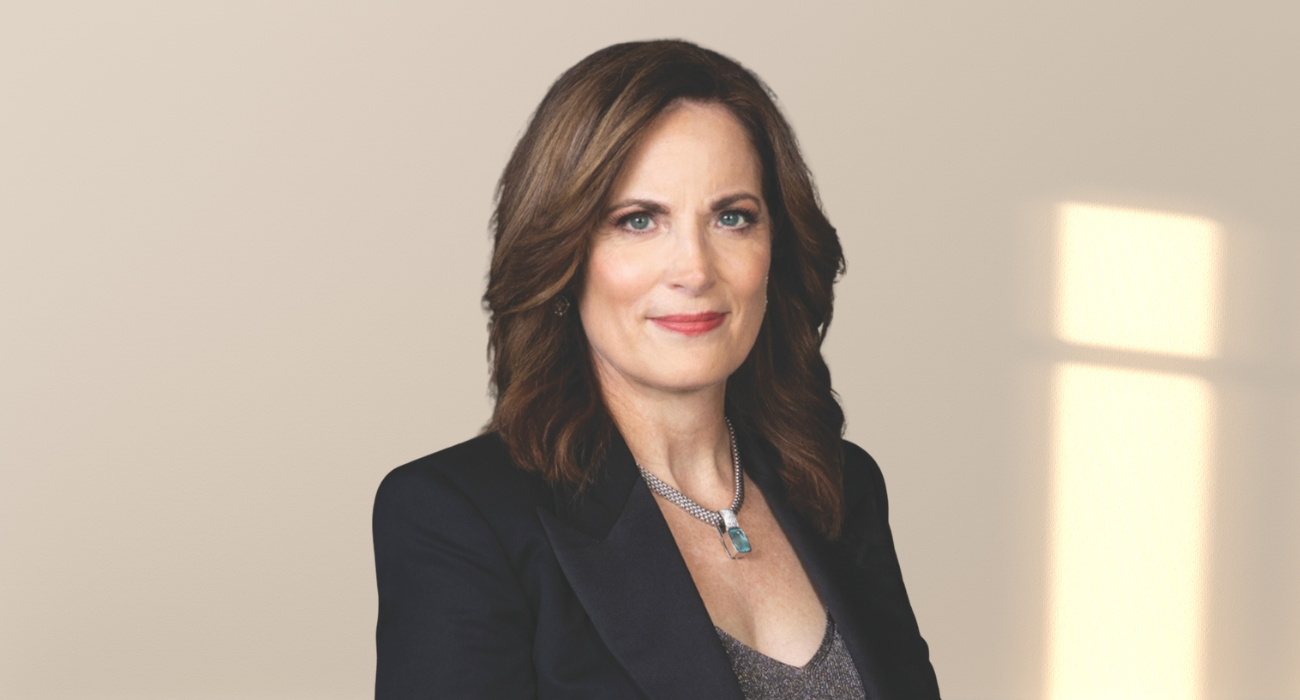
For Keren Eldad, that realization changed everything.
A former C-suite executive who became an executive and personal coach, keynote speaker, and author, Eldad has built her work around helping high achievers escape what she calls the gilded cage of success. Through her coaching practice and books, she helps people examine the expectations, thought patterns, and behaviors that keep them chasing achievement long after it has stopped bringing them fulfillment.
In a conversation with Jules Schroeder on Unconventional Life, Eldad shared how she dismantled her own conventional life, rebuilt it around her authentic preferences, and discovered that freedom requires more than changing your circumstances. It requires changing the way you think about who you are supposed to be.
Her message is particularly relevant to entrepreneurs, executives, and ambitious individuals who have achieved what they set out to accomplish but are beginning to wonder whether the life they built still fits.
When Checking All the Right Boxes Still Leaves You Unfulfilled
Eldad describes herself as someone who lived a conventional life, burned it down, and built an unconventional one.
Until her mid-30s, she followed a path that looked remarkably successful on paper. She excelled academically, attended a prestigious university, served as an officer in the Israeli Army, married, and rose to a C-suite executive position early in her career.
She had accomplished many of the things society celebrates, particularly for women: professional achievement, an established relationship, and the appearance of having everything together.
But behind the accomplishments was a growing sense of dissatisfaction.
Eldad did not enjoy her corporate environment or the work she was doing. Although she was good at her job and had substantial responsibilities, she struggled to see it as her life’s calling. At the same time, she was living in fear within an abusive marriage.
Eventually, the combination became intolerable. Her personal safety and unhappiness forced her to confront a reality she could no longer ignore.
Looking back, Eldad recognizes that reaching such a breaking point forced her to move when she might otherwise have continued tolerating a life that did not fit.
Yet she does not believe people should wait for circumstances to become unbearable before making a change.
“Don’t wait for the trauma,” she advised listeners.
Instead, she encouraged people to pay attention when they repeatedly find themselves questioning their circumstances and wondering whether life is supposed to feel the way it does.
For Eldad, dissatisfaction was not simply a problem to solve. It was an indication that the life she had built around external expectations needed to be reconsidered.
The Most Important Skill She Had to Learn Was Letting Go
When Schroeder asked what enabled her transition, Eldad identified something less tangible than a new qualification, business strategy, or professional skill.
It was the willingness to let go.
She had to release her need to be impressive, her attachment to other people’s expectations, and her belief that there was one correct way to live.
Many of her earlier decisions had been shaped by the desire to look successful and receive approval. Once she began questioning the results those decisions had produced, she realized that building a different life would require a different kind of courage.
That meant learning to say no. It meant tolerating criticism and accepting that people might reject her choices.
For high achievers, this can be particularly challenging. The same qualities that help people succeed in conventional environments, including discipline, ambition, and the ability to meet expectations, can also make it difficult to question whether those expectations deserve to be met.
Eldad’s experience revealed a different measure of courage: the ability to disappoint others rather than continue disappointing yourself.
The transition also required her to accept uncertainty. Letting go of a familiar identity meant allowing herself to discover what she wanted without knowing exactly what the next chapter would look like.
Her story suggests that personal reinvention does not always begin with a clear vision. Sometimes, it begins with acknowledging what no longer works and giving yourself permission to stop pursuing it.
Building an Unconventional Life Took 15 Years, Not One Leap of Faith
From the outside, a dramatic life change can look like a single courageous decision. Eldad’s experience was considerably more gradual.
She explained to Schroeder that her transformation unfolded over approximately a decade and a half.
During the first five years, she concentrated on studying and doing the internal work that would eventually inform her coaching practice. She began examining the way she thought and recognized how much of her thinking had been driven by obligation, fear of missing out, comparison, and external validation.
She started learning to think more deliberately, react less impulsively, and pay closer attention to her intrinsic desires.
Over the following decade, she began translating that internal work into a different professional and personal life.
She launched several businesses to support herself financially while developing her coaching practice. Coaching eventually took off, becoming an unconventional way to earn a living that aligned more closely with her interests and strengths.
Her personal life changed, too.
Eldad married someone she genuinely loved and wanted to spend time with, rather than someone who simply met conventional expectations. She chose not to have children because she did not want them. She built a home around the things she actually enjoyed, including her two cats.
Even her working style reflected a more authentic understanding of herself. She described herself as a writer and creative who enjoys working in a bathrobe with a cat nearby, rather than forcing herself into a corporate environment that never felt natural to her.
These details reveal something important about her philosophy. An unconventional life is not necessarily about making the boldest possible statement or rejecting tradition for its own sake.
It is about making choices that genuinely suit the person making them.
For Eldad, freedom meant creating a life in which her work, relationships, home, and daily routines no longer required her to perform a version of herself that someone else had approved.
The Chocolate Versus Vanilla Test: Are You Choosing What You Want?
During the conversation, Schroeder connected Eldad’s philosophy to a lesson she had encountered through the Landmark Forum: the simplicity of choosing what you like without needing to justify the preference.
If you prefer chocolate ice cream to vanilla, you can simply choose chocolate.
The example might seem trivial, but it illustrates a much larger pattern. People are often so accustomed to accommodating others that they struggle to make decisions without considering whether those decisions will be accepted.
Eldad expanded on the idea by describing the familiar situation of being served food you dislike at a dinner party. Some people will eat it anyway because they do not want to offend their host.
That instinct to be agreeable is understandable. But Eldad argued that the stakes become considerably higher when the decisions involve careers, marriages, and the direction of an entire life.
Choosing a partner because the relationship looks right on paper can carry a much greater cost than choosing a meal you do not enjoy. Staying in a career for decades because it offers security, despite knowing it no longer fits, can also mean sacrificing years of fulfillment.
The lesson is not that every preference should become a demand or that people should disregard their responsibilities. Rather, it is that people need to distinguish between a small compromise made for social convenience and a major compromise that requires them to abandon themselves.
Eldad described these lessons as simple but not easy.
Learning to honor your preferences requires recognizing when you are making a genuine choice and when you are simply following a script.
Escaping One Cage Does Not Mean You Are Free
Eldad’s first book, Gilded, grew out of her work with private coaching clients. She wanted to condense the ideas and philosophies she regularly recommended into a single resource rather than ask clients to read 10 to 15 books alongside their coaching work.
At the heart of Gilded is the metaphor of the gilded cage: a life that appears attractive and successful but feels restrictive from the inside.
Yet while developing her work, Eldad noticed that some clients were using the principles they learned to create a different version of the same problem.
Someone might leave corporate employment to start a business, only to work themselves into exhaustion because they still feel compelled to control everything.
Another person might leave an unfulfilling marriage and enter a new relationship that introduces a different set of problems.
The external circumstances change, but the underlying behaviors remain.
As Eldad explained, some people had learned to use her work to create “even shinier cages.”
That realization led her to develop Guilt Free, the second book in her trilogy.
Where Gilded focuses on changing the way people think, The Gilded Journal helps readers practice those new ways of thinking. Guilt Free focuses on changing obligation-driven behaviors so people can sustain the freedom they have begun to create.
Eldad also draws on Jungian psychology and the concept of individuation, which concerns the process of becoming more fully oneself.
Her distinction is important: getting out of a restrictive situation is one thing. Learning not to recreate that restriction somewhere else is another.
Someone can become a successful entrepreneur and still be driven by the same perfectionism that made corporate life unbearable. Someone can leave a relationship that does not fit and still make future choices out of fear, insecurity, or a need for validation.
Lasting freedom requires more than a change of circumstances. It requires examining the internal patterns that shaped those circumstances in the first place.
Stop Trying to Revive a Life That Has Run Its Course
In her coaching practice, Eldad frequently encounters people who arrive at a transition point because something that once worked has stopped working.
They may have reached a plateau in their careers, grown dissatisfied with their relationships, or discovered that the goals that once motivated them no longer feel meaningful.
Their initial instinct is often to repair the existing system. They want to reinvigorate their business, rediscover their motivation, or find a way to make their current life exciting again.
But Eldad challenges them to consider whether they are trying to revive something that has genuinely run its course.
As she put it, “There’s no reason to reinvigorate a machine that’s dead.”
The point is not that every period of dissatisfaction signals the need for a dramatic departure. Long-term relationships, careers, and businesses naturally encounter difficulties, and some problems can be resolved through honest communication and meaningful changes.
The deeper question is whether the situation itself remains right for the person living it.
Eldad gave examples of people who suppress important parts of themselves because they fear the consequences of acknowledging what they want. Someone might recognize their sexuality later in life, realize they want to pursue creative work instead of continuing in an established career, or acknowledge that a relationship has never genuinely been the right fit.
In each case, the individual may have suspected the truth for years but avoided acting on it because of what they believed they might lose.
The cost could involve reputation, financial security, social standing, relationships, or a familiar identity.
Eldad describes this kind of self-compromise as a bargain in which people trade parts of themselves to preserve the life they have built.
Her proposed antidote is honesty.
That means admitting what is no longer true, examining the fear behind continued inaction, and deciding what to do with that knowledge.
The process may be uncomfortable, but avoiding the truth does not necessarily eliminate its cost. It can simply extend the time spent living in a situation that no longer fits.
What If the Person You Think You Are Is Who You Learned to Be?
One of Eldad’s most significant observations is that people often confuse their conditioned identity with their authentic self.
When someone says, “This is who I am,” they may be describing a set of beliefs and behaviors developed over many years to gain approval, meet expectations, or remain within the boundaries of what felt acceptable.
Those patterns can become so familiar that they seem like permanent characteristics rather than learned responses.
Eldad encourages people to question that assumption.
The person they believe themselves to be may have been shaped by their upbringing, social environment, cultural expectations, and repeated efforts to fit in. Discovering who they really are requires examining those influences rather than accepting every familiar belief as the truth.
This process can involve dismantling ideas about what success should look like, what a good life is supposed to include, and which ambitions are genuinely their own.
It can also mean recognizing that a desire does not become invalid simply because it arrives later in life or contradicts choices made in the past.
For ambitious people in particular, this distinction can be transformative. Their identities may have become so closely associated with professional achievement, reliability, or being the person who always delivers that they struggle to imagine who they would be without those roles.
Eldad’s work invites them to separate what they have learned to do from who they actually want to be.
The goal is not to discard every part of one’s past. It is to become more conscious of which parts remain meaningful and which have been maintained out of habit or obligation.
A Different Definition of Success Begins With Authenticity
During the rapid-fire round, Schroeder asked Eldad what living an unconventional life means to her.
Her answer brought the conversation back to its central principle: living on your own terms in a way that honors your authenticity.
That philosophy is reflected in the choices she has made since leaving her former life. She has built a coaching practice, written books, developed her own body of work, and created a personal life around relationships and routines she genuinely values.
Even the smaller details matter. Eldad spoke about SoulCycle as a regular practice that supports her success, emphasizing that she enjoys exercise that makes her happy. When asked what she is most proud of, she named her marriage.
These answers reveal that her definition of achievement extends beyond professional milestones. Success also means having a life that feels right to live.
For people accustomed to measuring progress through promotions, revenue, recognition, or visible accomplishments, that can require a substantial shift in perspective.
The question becomes not only whether you can achieve something, but whether the achievement is worth pursuing in the first place.
It also means accepting that an authentic life may look different from what other people expect. It may include unconventional career choices, unexpected personal decisions, or the willingness to change direction after years of pursuing a particular goal.
There is no universal template for that life.
There is only the ongoing work of recognizing what matters to you and making choices that reflect it.
You Are Allowed to Become Someone Different
Eldad’s story is ultimately about the freedom to change.
She spent years following a path that appeared successful, only to discover that external approval could not substitute for personal fulfillment. Rebuilding her life required her to question the beliefs that had guided her decisions, experiment with a different way of working and living, and accept that other people might not understand her choices.
Her experience also demonstrates that transformation is rarely finished with one decision. It is an ongoing process of recognizing when old patterns return and choosing whether to continue following them.
As the conversation came to a close, Schroeder reflected on the possibility of making a new choice at any age. Eldad responded by recalling a line attributed to Alan Watts:
“You are under no obligation to be who you were 5 minutes ago.”
It is a fitting conclusion to a conversation about identity, ambition, and the courage to live differently.
You can appreciate what your past has taught you without remaining bound to every decision you have made. You can acknowledge the life you built while recognizing that it may no longer be the life you want.
And you can begin making different choices before dissatisfaction becomes a crisis.
The unconventional life, in Eldad’s view, is not necessarily the one that looks most extraordinary from the outside. It is the one that allows you to be who you really are.