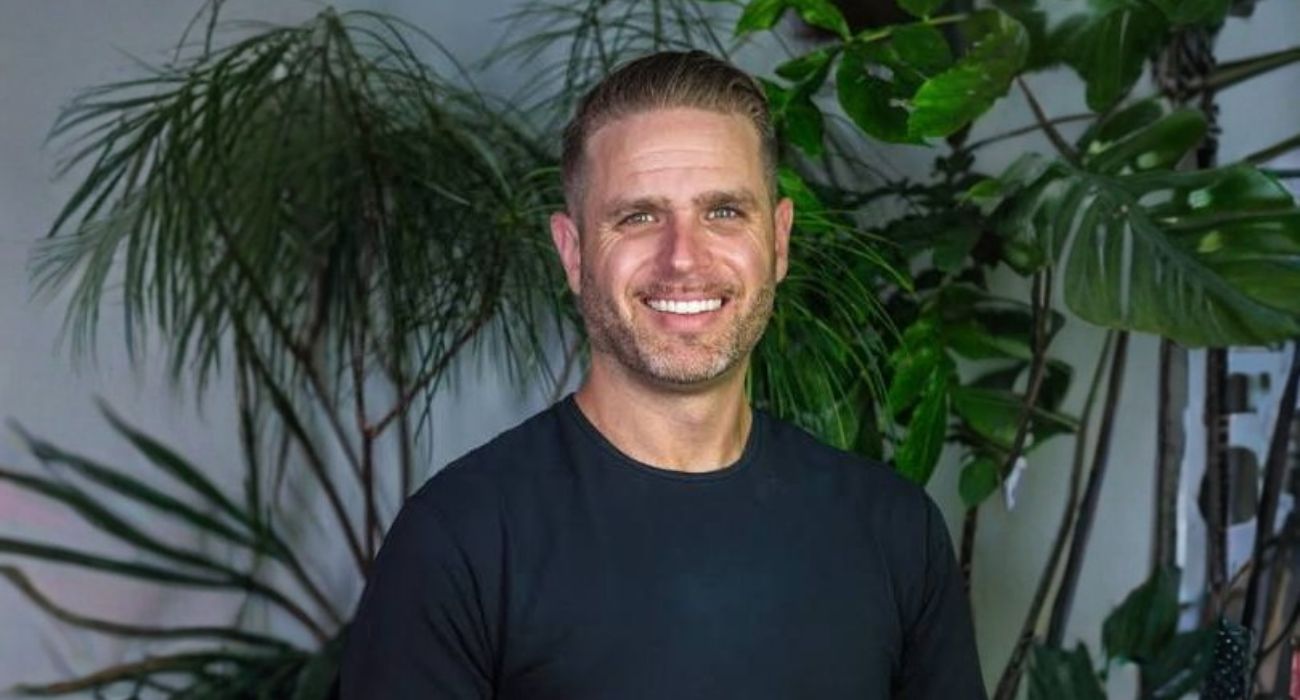
For years, Brent J. Freeman played the game of success exactly as society had taught him to play it.
He became an entrepreneur. He built companies. He chased impact, made money, lost money, and kept moving. From the outside, the picture looked impressive. But eventually, the achievements stopped answering the question that mattered most:
What if the life you’re building isn’t the life you’re actually meant to live?
That question would send Freeman on a decade-long exploration of neuroscience, mindfulness, subconscious programming, and human transformation—and eventually lead to The Alchemy of Joy, his upcoming book and the philosophy that now shapes his work.
When the Life You’ve Built Doesn’t Feel Like Yours
Freeman has been an entrepreneur for two decades. He launched his first company at 22 and spent years pursuing the things that many people are taught to want: financial success, achievement, and impact.
But even impact, he realized, could become another version of the same chase.
The problem wasn’t necessarily the ambition itself. It was what was happening underneath it.
Freeman began recognizing the subconscious programs that had shaped his decisions and behaviors. Society had handed him a definition of success, and like so many people, he had internalized it without necessarily questioning whether it was his own.
Then came a moment he could no longer ignore.
He woke up one morning in a San Francisco penthouse. He had a Mercedes in the garage and a multimillion-dollar company. By every conventional measure, he was winning.
Then he walked to the window and wondered if he should end his life.
“From the outside, I was crushing it,” Freeman recalls. “But from the inside, I was crushed.”
The realization was devastating—but it was also the beginning of something new.
Freeman describes the experience as a “dark Tuesday of the soul.” Rather than continuing with his meetings that day, he canceled them and went to the beach. He watched a sunset—something he realized he hadn’t done in years—and began writing down the things that brought him joy.
He called it his List of Joy.
At the top of the list was Italy. The rest was made up of the experiences, places, and simple moments that genuinely lit him up.
And the realization was almost painfully obvious:
He wasn’t doing any of them.
The Programming Beneath the Pursuit
That day changed Freeman’s understanding of his own life.
He had grown up relatively happy despite losing his mother to cancer when he was seven. But as he looked back at his life, he began seeing repeated patterns—particularly around abandonment.
His mother had died when he was young, and he developed what he calls a core narrative of abandonment. As he examined his relationships and experiences, he noticed the same pattern appearing repeatedly.
Eventually, he confronted an uncomfortable possibility.
He was the common denominator.
That realization led to one of the central questions behind his life’s work:
If we were programmed unconsciously, could we consciously reprogram ourselves?
Freeman decided to find out.
For the past decade, he has immersed himself in the study of neuroscience, mindfulness, meditation, and human transformation. He studied under Joe Dispenza for a decade and traveled with Tony Robbins for a year, while using his own mind and body as a testing ground for what actually worked.
The goal wasn’t to collect inspirational ideas.
It was to separate the signal from the noise.
And eventually, he began developing what he describes as a new operating system for personal life—one that could help people change the subconscious patterns that had been running in the background.
The Hidden Cost of Living in the Red
The deeper Freeman went into his own transformation, the more he began connecting emotional patterns with physiology.
He describes chronic stress as a state in which the body enters a cortisol-driven fight, flight, or freeze response. That state is useful when you’re facing an immediate threat. The problem, he argues, is when it becomes your normal operating condition.
Freeman experienced the consequences personally.
He says his inflammation was measured at 600% higher than normal, he gained more than 40 pounds, and he experienced issues connected to an undiagnosed autoimmune disease.
Eventually, he realized that the answer wasn’t simply to think differently.
He needed to learn how to work with his physiology.
That became central to his understanding of joy.
“Joy is not experienced in fight-flight, or freeze,” he explains. “Joy is experienced when we are present.”
And that leads to perhaps his simplest definition of the entire philosophy:
Joy is the absolute value of the present moment.
The Joy You’re Looking For Might Already Be Here
Freeman’s definition of joy isn’t about pretending everything is wonderful.
It’s about being present enough to actually experience what is happening.
During the interview, Freeman is sitting in an RV in Wyoming on his honeymoon. Jules is in Boulder, Colorado. He notices the fireplace behind her, the surroundings, the scenery outside his RV.
There is joy available in that moment.
But if his mind moves backward into everything that went wrong—or forward into everything he needs to accomplish—he misses what’s happening right now.
Freeman frames it simply: depression lives in the past, anxiety lives in the future.
The present, by contrast, is where we can actually experience life.
And the present doesn’t have to be perfect.
It can be perfectly imperfect.
That distinction is at the heart of Freeman’s philosophy. Joy isn’t the reward waiting at the end of achievement. It is something that becomes available when we stop abandoning the moment we’re actually living.
From High Beta to Flow
Freeman takes the idea further by explaining how different states of brain activity relate to the way we experience life.
He describes beta as the conscious, awake state and high beta as the fight-or-flight state. Alpha, he explains, is associated with flow—the state people can experience while skiing, snowboarding, running, or working out.
Theta is a deeper, hypnotic state where Freeman believes people can begin accessing and reprogramming subconscious patterns.
His broader point is that modern high performers can become accustomed to operating in high beta.
They’re always responding.
Always solving.
Always producing.
Always preparing for what’s next.
They become so accustomed to running their lives in the red that they forget what it feels like to slow down.
For Freeman, learning to access presence isn’t about becoming less ambitious. It’s about creating the internal capacity to experience the life that ambition is supposedly building.
The One-Minute Window
Freeman doesn’t believe transformation has to begin with an elaborate retreat or a complete life overhaul.
During the conversation, he gives listeners a practice they can begin immediately: what he calls the One-Minute Window.
The exercise takes about 60 seconds.
Put one hand on your heart and one over your sternum. Slow your breathing and make the exhale longer than the inhale. Freeman specifically describes a six-second inhale, four-second hold, and eight-second exhale, repeated three times.
Then focus your attention on something around you. Zoom in on it.
Finally, bring up an elevated emotion such as gratitude, love, or appreciation.
The purpose is simple: interrupt the momentum of whatever state you’re in and return to the present.
Freeman sees this as a fundamental skill—not unlike practicing your footwork before the fourth quarter of a game.
You don’t want to wait until your nervous system is overwhelmed to learn how to regulate it.
You practice beforehand.
You Don’t Have to Burn Your Life Down
Perhaps one of the most compelling aspects of Freeman’s philosophy is that his answer to conventional success isn’t to reject success altogether.
He isn’t telling people to quit everything, abandon their careers, or start their lives over.
In fact, he emphasizes the opposite.
The work is about learning how to live the life you were meant to live without burning it all down.
Freeman has co-founded more than 20 companies. Most of them failed. A few succeeded.
His story isn’t one of perfect execution.
It’s one of experimentation, failure, heartbreak, grief, and eventually learning how to work with those experiences rather than allowing them to define him.
He calls this process Joy Judo: taking what life throws at you and learning to transmute it into something meaningful.
That’s the “alchemy” in The Alchemy of Joy.
Joy isn’t about eliminating hardship.
It’s about changing what you do with it.
A Book Built to Be a How-To Guide for Joy
Freeman’s upcoming book, The Alchemy of Joy, grew partly out of an idea he had after reading The 4-Hour Workweek years ago.
He wondered: What if there were a how-to guide like that—but for joy?
The result is a step-by-step framework for reprogramming the subconscious mind, built around Freeman’s personal experiences, frameworks, and practices.
Each module includes an accompanying meditation, and Freeman designed the meditations to be accessible even to people who have never meditated before. They incorporate binaural beats and music to help listeners enter the desired state.
The intention is to move the work beyond intellectual understanding—to integrate it “from the head to the heart.”
The Alchemy of Joy is scheduled to be released on September 15, 2026, and will be available through Amazon and bookstores.
But Freeman is clear that the book isn’t really the destination.
It’s an invitation into a journey.
The Harder Path to Love
Near the end of the conversation, Jules asks Freeman what he’s most proud of in this season of his life.
The answer isn’t a company.
It’s his marriage.
Freeman shares that he and his wife, Michelle, experienced profound heartbreak. They broke up three months before their wedding in Italy and went their separate ways, doing individual work to grow and evolve.
Eventually, they came back together and chose one another again.
For Freeman, that choice wasn’t the easier path.
It was the harder one.
He credits Michelle with being willing to “sit in the fire” with him—to do the work individually and as a couple and transform what they had experienced into the joy of their marriage and their life together.
It is a fitting example of the philosophy he has spent years teaching.
You don’t always get to choose what happens to you.
But you can learn how to work with what happens.
The Road Less Traveled Is About Sovereignty
In the rapid-fire portion of the interview, Freeman describes himself as a “super dork” who geeks out on neuroscience, quantum physics, nature, and everything from the “woo-woo” to grounded science.
That combination reflects his larger philosophy: curiosity without needing to fit neatly into one category.
When Jules asks what living an unconventional life means to him, Freeman’s answer is remarkably direct.
It’s about doing what lights you up rather than following “the program” that tells you what you should do.
It’s about choosing with sovereignty.
Not conforming.
Not fitting in.
Not measuring your life against someone else’s definition of success.
Instead, Freeman believes in getting still enough and quiet enough to hear your own heart—and then building a life you can look back on and genuinely describe as an amazing ride.
In his work, he uses a self-eulogy exercise to help people gain that perspective.
The question is simple:
When you reach the end of your life, what will you want to say about the ride?
Because, as Freeman puts it, you only get one shot.
There is no dress rehearsal.
The Giveaway: A Signed Book and One Hour With Brent
For one Unconventional Life listener, Brent is offering more than a copy of The Alchemy of Joy.
One lucky participant will receive a signed copy of the book plus a complimentary 60-minute Zoom session with Brent.
The coaching session can focus on whatever is present for the winner—a challenge they’re facing, something they’re working through, or simply whatever they want to talk about. Freeman describes it as an opportunity to give someone access to the kind of coaching he provides to CEOs, entrepreneurs, and executives.
Connect with Brent:
Website: https://brentfreeman.com/
Instagram: https://www.instagram.com/joywithbrent/
LinkedIn: https://www.youtube.com/@SirBrentFreeman
Brent is also inviting people to reach out through Instagram with questions, ideas, and topics they’d like to hear more about as he builds the next chapter of his work.
Because for Freeman, the journey toward joy isn’t about reaching some final destination.
It’s about learning to be here for the ride.