
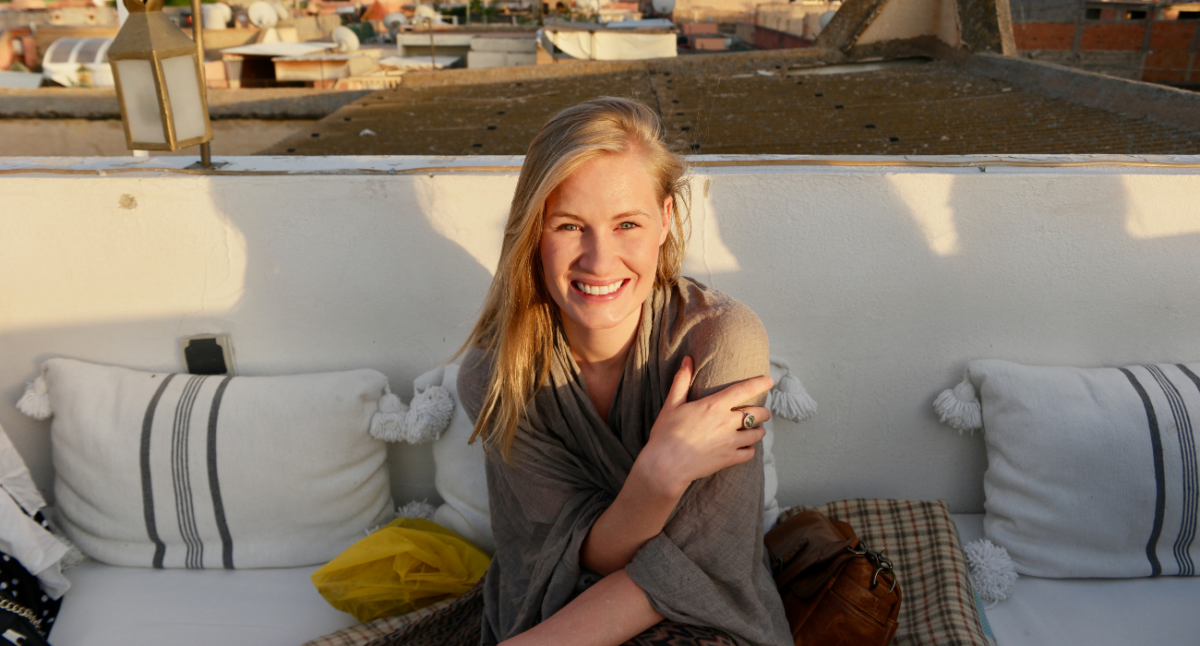
For Tara Cappel, travel was never simply about getting somewhere else. Growing up in Sun Valley, Idaho, a beautiful but relatively isolated community, travel became her way of discovering different cultures, meeting people unlike herself, and imagining lives beyond the one she knew.
That curiosity would eventually become the foundation for FTLO Travel, the modern group travel company Cappel founded in 2016 for solo travelers in their 20s and 30s. Today, FTLO brings together solo travelers through curated small-group experiences designed around connection, culture, and adventure. The company says it has welcomed more than 8,000 travelers and built more than 35 curated itineraries, with more than 4,000 five-star reviews.
But Cappel’s entrepreneurial story didn’t begin with a business plan that everyone believed in.
It began with an idea people told her wouldn’t work.
The Idea Everyone Told Her Was Wrong
Before FTLO existed, Cappel had spent time in fashion and later worked in operations for a startup focused on sustainable promotional products. That experience gave her something invaluable: a crash course in what it actually takes to build a company.
But travel remained the through line.
She had studied abroad in high school, taken a gap year, and continued looking for ways to experience the world. Eventually, she became fixated on a question: What if group travel were designed specifically for millennials?
At the time, the conventional wisdom was that millennials weren’t interested in group travel.
Cappel heard it directly from people in the travel industry.
“Millennials don’t do group travel,” they told her.
She wasn’t convinced.
She was watching her generation reprioritize their lives. People in their 20s and 30s were traveling, delaying traditional milestones, pursuing experiences, and looking for connection in new ways. Cappel saw a gap between what the industry assumed young travelers wanted and what she believed they were actually looking for.
And once the idea took hold, she couldn’t let it go.
“I couldn’t not do it,” she says.
That conviction became the first ingredient in FTLO.
Building FTLO Between 8 P.M. and 2 A.M.
Cappel didn’t immediately leave everything behind and become a full-time founder.
She worked her regular job during the day and built FTLO at night.
From roughly 8 p.m. until 2 a.m., she worked behind the scenes to turn the idea into something tangible. With little money to invest, she learned how to build the website, figure out SEO, handle design, and piece together the early business herself.
It wasn’t glamorous.
But she was energized by it.
There was something about building the idea that made the long hours feel different.
That distinction matters. Entrepreneurship is often romanticized as freedom, but Cappel’s early experience looked much more like relentless work. The difference was that the work was connected to something she deeply cared about.
She wasn’t simply escaping a job.
She was moving toward something.
And she had already learned from her previous startup experience that businesses don’t come together by magic. Someone has to figure out the details.
Don’t Just Sell the Trip. Solve the Reason Someone Won’t Take It.
One of Cappel’s most useful entrepreneurial insights comes from a framework she encountered early in FTLO’s development: the Jobs to Be Done theory.
The premise is simple but powerful.
People aren’t necessarily buying the product itself. They’re using a product or service to fulfill a deeper need.
For FTLO, the product might look like a group trip.
But the real problem was much bigger.
Someone might want to visit Sardinia but think:
I don’t have anyone to go with.
FTLO solves that.
They might think:
I don’t speak the language.
FTLO provides local trip leaders.
They might think:
I don’t know where to go or what to do.
FTLO handles the itinerary and logistics.
In other words, Cappel wasn’t simply creating vacations.
She was removing the obstacles between people and the experiences they wanted.
That philosophy remains central to FTLO’s approach today. The company describes its experience as being at the intersection of travel and community, with itineraries intentionally designed not only around destinations but around bringing people together.
For entrepreneurs, the lesson extends far beyond travel:
The strongest businesses don’t just sell something people want. They make it easier for people to become who they already want to be.
The First Version Didn’t Work—and That Was the Point
FTLO’s success can make the early years easy to forget.
They were messy.
Cappel initially thought she’d be running international trips within six months of launching. Instead, it took about a year and a half to run the first international trip.
She went back to the drawing board.
She experimented with local trips.
They didn’t make money.
Some were sold at roughly half price and at a loss.
Her early marketing efforts flopped, too.
There was no single breakthrough moment that suddenly transformed FTLO into a sustainable company.
Instead, there was testing.
Then tweaking.
Then more testing.
And more tweaking.
Eventually, Cappel found a model people were willing to pay for.
That process became one of the most important lessons she carries from the experience: get your first customers as early as possible, use their feedback to improve the offer, and don’t spend heavily on marketing until you’ve established that people actually want what you’re selling.
A compliment is not validation.
A paying customer is.
From a Bedroom Idea to a Global Travel Community
That willingness to iterate eventually helped FTLO grow far beyond its first experiments.
The company now creates curated group trips for solo travelers in their 20s and 30s, with destinations spanning Europe, the Americas, Africa, the Middle East, and beyond. Its current model emphasizes not only memorable destinations but the people travelers experience them with.
The company’s own philosophy reflects that emphasis: travel is meant to connect people with places, perspectives, and one another.
And for Cappel, that community component has always been part of the bigger picture.
She wanted to eliminate the common reasons people postpone travel.
No travel partner?
Come with a group.
Don’t know the destination?
The itinerary is already curated.
Don’t speak the language?
There’s a local trip leader.
Don’t know how to plan everything?
That’s handled, too.
The result is a travel experience built around a simple premise: you shouldn’t have to wait for someone else’s availability to experience the world.
Travel Should Give Back to the Places We Visit
Cappel’s approach to travel was also shaped by where she grew up.
Sun Valley is a tourism-based economy, and because it is a relatively small community, the economic impact of tourism is particularly visible.
That gave Cappel an early understanding of something that can be easy to overlook when traveling: the money visitors spend doesn’t exist in a vacuum.
It affects real people and real communities.
As a result, responsible tourism became part of FTLO’s philosophy.
The company says it prioritizes local, family-owned businesses so that more of the money generated by its trips remains in the communities travelers visit. It also emphasizes respectful engagement with local cultures and a positive economic, social, and environmental impact.
For Cappel, seeing the world isn’t about extracting experiences from it.
It’s about entering a place with curiosity and respect—and leaving something positive behind.
What Happens When the Founder Finally Steps Away?
After a decade of building FTLO, Cappel found herself confronting a different entrepreneurial challenge: stepping away.
She’s currently taking a month-long sabbatical, something made possible in part by FTLO’s company policy of offering employees a month-long sabbatical after five years.
For someone who has spent years immersed in the day-to-day details of a growing company, leaving wasn’t easy.
But something unexpected happened.
After stepping away for about a week and a half, Cappel began to feel some of the early passion returning.
Ideas started coming back.
Perspective returned.
The distance created room for creativity.
It was a reminder that even founders who are deeply passionate about their businesses need time outside of them.
For Cappel, that lesson carries a particularly fitting irony: the founder of a travel company needed to step away from work to rediscover what travel and new experiences can do for the mind.
“Go travel,” she tells Schroeder in her own way.
New experiences create connections that can lead to ideas you never would have generated sitting at your desk.
The Founder Is Also a Science Nerd
Behind the CEO and travel entrepreneur is another side of Cappel that emerges during the episode’s rapid-fire round.
If people really knew her, she says, they’d know she’s somewhat nerdy about science.
She can fall into a deep flow state learning about subjects like photons, biology, health, and how the human body works.
It’s a small detail, but an important one.
The woman who built a company around helping people explore the world is herself driven by curiosity.
Travel, entrepreneurship, science—there’s a common thread.
She wants to understand things she doesn’t already understand.
If She Started Over Today, She’d Go Even More Niche
Asked what she’d do if she were starting a travel company today, Cappel doesn’t say she’d try to recreate FTLO.
She’d go narrower.
FTLO originally focused on an age-based niche, but she sees tremendous opportunity in passion-based travel—experiences built around specific interests, creative pursuits, and communities.
It’s a lesson that applies well beyond tourism.
In a world where almost every market is crowded, being more specific can make a business more relevant.
The question isn’t always:
How can I reach more people?
Sometimes it’s:
Who is the exact person I want to serve, and what do they care deeply about?
Cappel also offers a piece of advice that contrasts with her own early leap: aspiring founders don’t necessarily need to quit their jobs immediately.
With today’s technology, entrepreneurs can test ideas, build audiences, and even begin generating revenue before making the full-time jump.
In hindsight, she believes she may have left her day job too early.
Travel Taught Her There Isn’t One Right Way to Live
Perhaps the most fitting moment of the conversation comes when Schroeder asks Cappel what living an unconventional life means to her.
Her answer goes back to travel.
When you see enough of the world, you begin to understand just how many ways there are to live.
Different cultures have different ideas about family, work, success, community, relationships, and what makes a good life.
That realization can make the “right path” you were handed growing up look a lot less absolute.
For Cappel, an unconventional life means stepping outside the expectations of your upbringing or community and asking a more personal question:
What is actually true for me?
Follow your passions.
Follow what inspires you.
Stay true to yourself.
It’s a philosophy that explains both her life and the company she built.
She didn’t simply create a travel business.
She built a company around her belief that experiencing different places and people can expand the possibilities someone sees for their own life.
And perhaps that’s the most unconventional thing about FTLO: it isn’t really selling a destination.
It’s selling the possibility of discovering that your world can be bigger than you thought.
Want to Pick Tara Cappel’s Brain?
If you’re dreaming about starting a travel company, she’ll share the pitfalls she’s encountered, talk through business models, discuss how to find those first customers, and offer insights that could help another entrepreneur avoid some of the time and heartbreak she experienced along the way.
And if you’re not building a travel company, there’s still something in it for you.
Cappel is also happy to talk travel—particularly the off-the-radar destinations that may not show up at the top of a typical search.
Connect with Tara:
Website: https://www.ftlotravel.com/
Instagram: https://www.instagram.com/taracappel/
LinkedIn: https://www.linkedin.com/in/taracappel/