
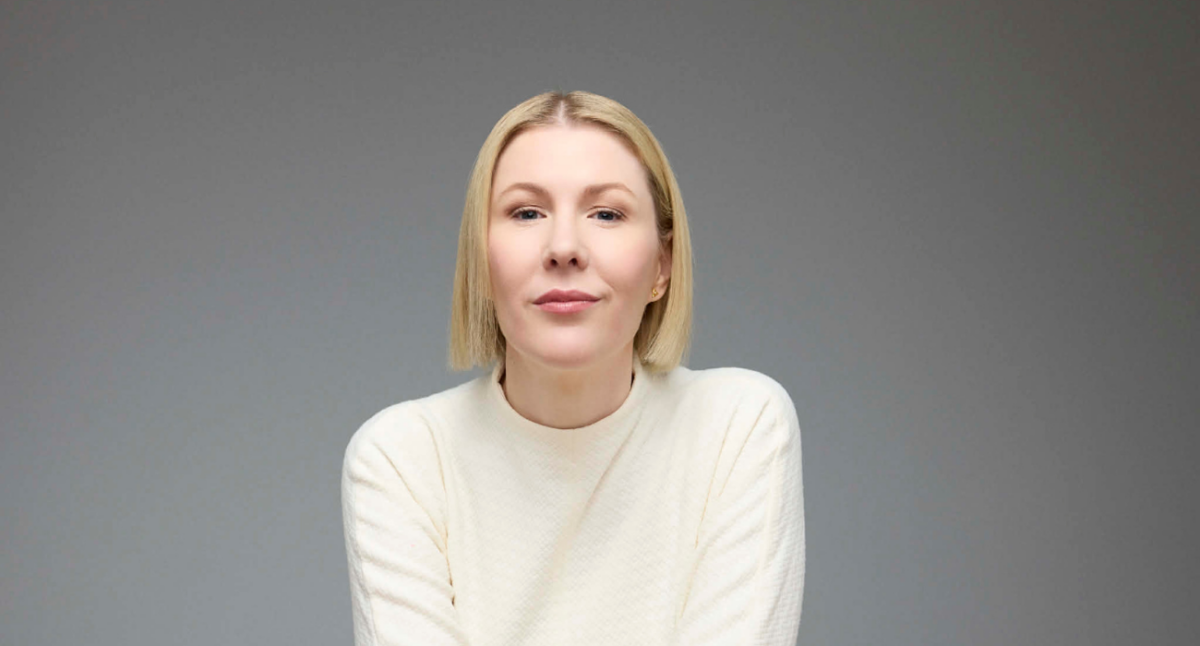
For Meg Tuohey, the work of repairing relationships began long before she became a psychologist, relationship expert, author, and innovator. It began with a little girl sitting in the passenger seat of a car, looking through the window at a family gathered around a warm dinner table.
The house was lit. The blinds were open. There were several people inside.
Then the car turned the corner, and the moment disappeared.
Tuohey was heading home to a cold, dark house with one parent and no siblings. She remembers the loneliness of that childhood and, more importantly, the feeling that someone might come to help—but nobody ever did.
Years later, those seemingly ordinary childhood snapshots would become part of the inspiration behind her life’s work.
As Tuohey explains in her conversation with Unconventional Life host Jules Schroeder, she eventually decided she wanted to become “the person who came”—the person who could hold space for families and create the warmth, safety, and connection she had once longed for herself.
Today, Tuohey works at the intersection of relationships, neurodivergence, leadership, women, and what she calls wisdom and eldership. Her podcast, Wisdom Stripes, has surpassed 1.8 million downloads and ranked among the top 15 podcasts in Education in the U.S. She has worked with thousands of women and couples across the U.S. and Canada, and her debut book, Heartprint, extends her work to a much wider audience.
But beneath all the professional accomplishments is a surprisingly simple philosophy: the way back to a better life often begins by returning to yourself.
The Childhood Memory That Became a Calling
When Schroeder asks Tuohey for the “fly-on-the-wall” moments that shaped her, Tuohey doesn’t begin with a credential or career milestone.
She goes back to childhood.
She remembers seeing that family through the window at dusk and wondering, in some way, what it might feel like to belong to something warm and connected.
Her childhood wasn’t defined only by hardship. There were good experiences, too. But the loneliness left an imprint.
She remembers wishing someone would come and see her, help her, or hold space for what she was experiencing.
Nobody came.
Eventually, that longing became a decision.
Tuohey describes the memories from her hometown as threads that helped form the fabric of her work. Somewhere along the way, she decided she would become the person who could create that sense of warmth and gathering for the families she encountered.
It is a striking example of how purpose can emerge from the most personal parts of a life.
Rather than simply moving past her childhood, Tuohey found a way to transform what she had experienced into a deeper understanding of what people need from one another.
Building a Different Kind of Marriage Repair
That philosophy eventually became the foundation for a relationship-repair model that Tuohey says was unlike anything else she had seen when she created it.
About nine years ago, she developed a group coaching program specifically for women experiencing serious relationship crises—often after they had already tried other avenues for help.
Over time, another major area of focus emerged: neurodivergence.
Today, Tuohey says that approximately 80% to 90% of the people who come through her work either identify as neurodivergent or love someone who is neurodivergent.
Her work now rests on five interconnected pillars:
-
Relationships
-
Neurodivergence
-
Leadership
-
Women
-
Wisdom and eldership
That final pillar reflects one of the more distinctive aspects of her philosophy: the idea of being the change you want to pass through your generations.
For Tuohey, relationship work isn’t simply about solving today’s argument. It can also be about changing patterns that are passed from one generation to another.
Why Tuohey Doesn’t Meet the Husbands
One of the most unconventional aspects of Tuohey’s model is also one of the simplest: she doesn’t work directly with her clients’ partners.
She designed it that way intentionally.
Tuohey explains that she loves working in groups and believes there are powerful benefits to community. At the same time, she believes working with couples within a group setting would introduce unnecessary complexity and inefficiency.
Instead, she works with what she calls Wise Women.
The concept isn’t about suggesting women are responsible for every problem in their relationships. Tuohey acknowledges the frustration women may feel when they hear an approach that focuses on their own transformation: Why should I be the one who changes?
Her answer is rooted in leadership.
Tuohey believes women can be powerful cultural tone-setters within their homes and relationships. Her work therefore focuses on helping women understand themselves, develop skills, learn how to lead, and ultimately reconnect with who they really are.
Her model combines psychoeducation, practical skills, self-learning, and leadership development.
The objective isn’t to make women carry responsibility that isn’t theirs.
It’s to help them distinguish what is theirs, what isn’t theirs, and how they want to lead from there.
The Hidden Force Behind So Many Relationship Conflicts
For Tuohey, one of the most important questions isn’t simply why couples fight.
It’s why human beings defend themselves.
She sees defensiveness as a central force behind many of the struggles people experience in relationships.
Humans defend themselves against pain. They defend themselves against confusion. And, perhaps most importantly, they defend themselves against the possibility of experiencing even more pain or confusion.
In a new relationship, repairing a conflict can be relatively straightforward because trust and goodwill may still be strong.
But long-term relationships can become more complicated.
Small hurts that aren’t repaired accumulate.
Over time, those moments can turn into beliefs:
It’s always me.
It’s all up to me.
He doesn’t understand.
I wish…
The problem eventually becomes larger than the original disagreement. It becomes the accumulated pain of feeling unseen, unheard, or misunderstood.
And when people are already dealing with trauma, addiction, neurodivergence, or other significant life challenges, the level of defensiveness can become even greater.
You Can’t Lead While You’re Defending
This is where Tuohey’s relationship philosophy becomes a leadership philosophy.
She argues that defensiveness can prevent people from seeing what’s actually happening. It can interfere with healing, appropriate responsibility, and the ability to distinguish between what belongs to you and what doesn’t.
Most importantly, she believes you can’t lead while you’re defending.
The defensive part of us needs to be heard, understood, and cared for before the person underneath it can emerge and begin leading again.
That distinction is critical.
Tuohey isn’t telling women to suppress their anger, ignore their pain, or simply become more accommodating.
She’s asking a different question:
What happens when you understand the part of yourself that is protecting you well enough that you no longer have to let that protection run your life?
For Tuohey, that is where real leadership begins.
Heartprint: A Guide Back to Inner Wisdom
After years of working with women and couples, Tuohey wanted to find a way to bring her work to people beyond the relatively small number of women she can personally support.
That became Heartprint, her debut book.
The book took five years to construct. Tuohey describes it as a three-part story and a practical guide designed to take complicated ideas and make them simple.
At the heart of Heartprint is the idea that people can develop distance from their own inner wisdom.
Pain and confusion can create defensiveness. Defensiveness can help a person survive and protect themselves—but it can also create distance from who they are.
The book is designed as a step-by-step journey back.
Each chapter includes an activity intended to help readers reconnect with themselves. And for anyone who struggles to hear their own inner wisdom, Tuohey offers a bridge: Elizabeth, the Wise Woman character in the book.
Readers can “borrow” Elizabeth’s wisdom until they are able to hear their own.
The goal isn’t to run away from pain.
It’s to integrate it rather than remain disconnected from yourself because of it.
Tuohey sees that process as part of the universal human experience: moving through pain and finding a way back home to yourself.
From a Deeply Personal Practice to a Global Mission
Tuohey’s work is deeply intimate, but her ambition isn’t small.
She acknowledges that her direct work is intentionally deep and therefore cannot hold a massive number of people at the same level of care.
Her heart, however, is for women and families.
That is why she sees Heartprint and Wisdom Stripes as extensions of the same mission: creating accessible ways for more people to begin the process of reconnecting with themselves.
Her hope for Heartprint is not simply that people read it.
She wants the book to awaken a desire in people to return to who they really are and begin living a life that feels good to them.
It is a deceptively simple goal—and one that sits at the center of everything she does.
What It Means to Live an Unconventional Life
When Schroeder asks Tuohey what living an unconventional life means to her, the answer brings the entire conversation full circle.
For Tuohey, unconventional living isn’t necessarily about rejecting every conventional path.
It’s about full expression.
It’s about being yourself.
And, ultimately, she believes one of the greatest gifts a person can give themselves, their loved ones, and the world is to return home to who they really are and live a life that feels good to them.
That philosophy makes the title Heartprint particularly fitting.
A person’s life leaves an imprint. But before that imprint can be intentionally passed forward, Tuohey believes people need to know who they are.
The work begins within.
The Quiet Rituals Behind the Work
For all the intensity of her professional work, Tuohey’s personal rituals are remarkably grounding.
If you really knew her, she says, you’d know she enjoys cozy reading, a good cup of tea, and a crackling fire.
She also meditates every day—a practice she’s maintained since October 2019. She meditates every night and most mornings, often lying down in the dark.
That practice of returning inward mirrors the philosophy she teaches outwardly.
Before leadership, there is awareness.
Before repair, there is understanding.
Before reconnecting with someone else, there may be a need to reconnect with yourself.
The Message She Would Give Her Younger Self
Near the end of the conversation, Schroeder asks Tuohey what she would say to the lonely little girl she once was.
Her answer brings the entire journey back to that car ride at dusk.
She would tell her:
“I’m coming.”
She would tell her she’s on her way—and that she’s bringing an army of kindness, care, compassion, and love.
And she would promise that little girl she would never be alone again.
It is difficult to imagine a more complete expression of Tuohey’s life’s work.
The little girl who once wished someone would come eventually became the woman who chose to become that person—not only for herself, but for the women and families she serves.
And perhaps that’s the most unconventional part of her story.
She didn’t simply build a career around relationships.
She built a life around answering a question that began in childhood:
What if we could become the person we once needed?
Giveaway: Win a Signed Copy of Heartprint
The book can be shipped from America to the winner wherever they are located.
Connect with Meg:
-
Website: https://megantuohey.com/
-
Instagram: https://www.instagram.com/megtuoheyofficial/?hl=en
-
Book: https://megantuohey.com/megan-book-heart-print/book-order/
-
Podcast: https://megantuohey.com/wisdom-stripes/