Unconventional Life – Podcast, Blog, Live Events

Category: Money

  • Ep465: The Man Who Treats Setbacks Like Training: Will Carr’s Blueprint for Purpose, Protein, and Parenthood

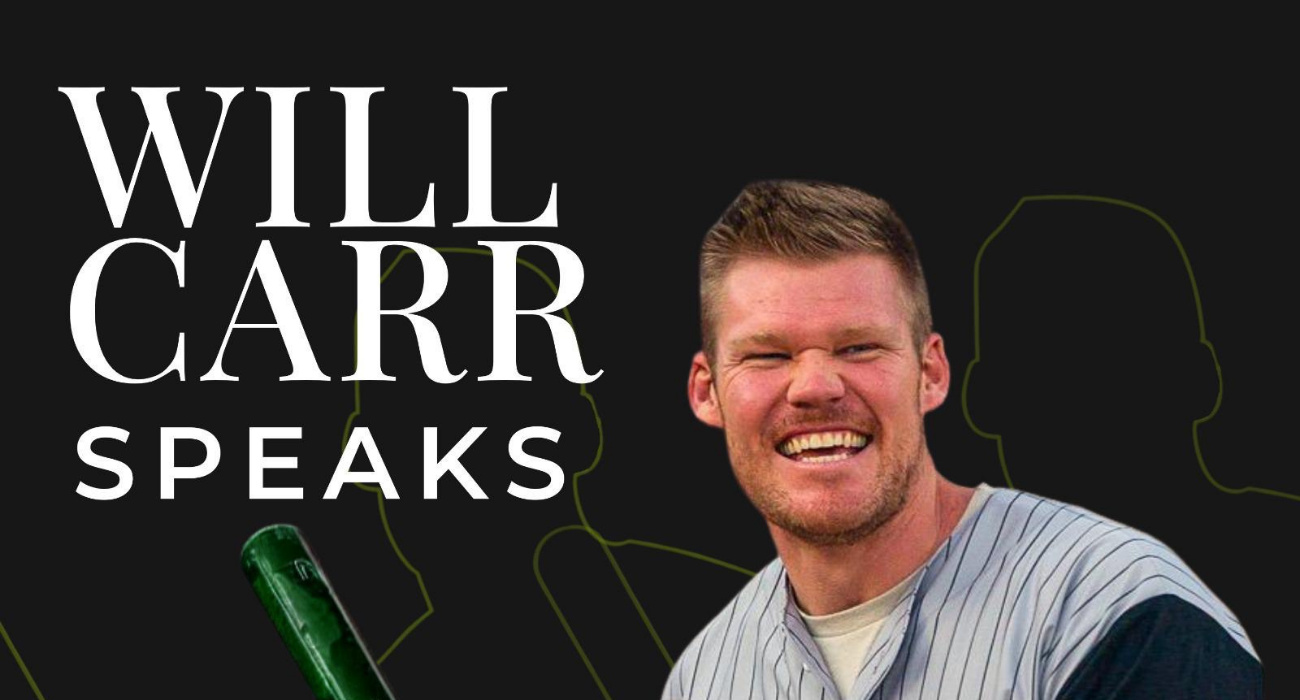
    Ep465: The Man Who Treats Setbacks Like Training: Will Carr’s Blueprint for Purpose, Protein, and Parenthood

    Will Carr doesn’t talk about grit like it’s a brand asset. He talks about it like a choice you make after impact.

    “Are you going to pick yourself up when you get punched in the face?” he says early in his conversation. His answer is immediate: “Yep. And keep going.”

    That isn’t justmotivational poster language for Carr. It’s lived experience, sharpened through sport, tested through entrepreneurship, and grounded in a faith that asks him to become the kind of person who can hold both the win and the wreckage.

    A 6’11” Kid on a Corn Farm Who Learned Community Before Success

    Carr is 6’11”, and he knows it’s the first detail people clock. But the more defining detail is where he grew up: rural Midwest, on a corn farm, in the pre-cellphone era where “going to play” meant hopping on a four-wheeler and trusting you’d find your way back home.

    Sports didn’t become his outlet the way it does for many kids. For Carr, it became belonging.

    It was how he spent time with his dad. How he connected with family. How he socialized when “neighbor” could mean a long country road away. Baseball was his first love. Basketball became the logical next chapter as he kept growing taller and taller, until the path was practically chosen for him.

    He went on to play college basketball at Colorado School of Mines while studying engineering, and later played professionally overseas. Eventually, like every athlete learns, the clock runs out. The identity shifts. The built-in team disappears. And you find out what you’re made of when the uniform is gone.

    Why Athletes Make Dangerous Entrepreneurs

    Carr believes athleticism trains you for entrepreneurship in ways business school can’t replicate.

    Athletes don’t just learn to win. They learn what losing is for.

    “You learn to love to lose,” he says, because losing is where the data lives. It’s where you reflect, retool, and return sharper. Winning feels good, but it doesn’t force evolution.

    In business, that mindset becomes a survival skill. You can lose nine out of ten times and still be the person who wins in the end—because the most successful people are often the ones who have failed the most.

    Schroeder echoes this with her own story of extreme highs and lows in entrepreneurship and the “zones of turbulence” that show up right before a breakthrough. Success, she argues, requires capacity: the ability to hold the equal and opposite swing of challenge.

    Carr offers an image from Taoist philosophy: the pendulum. Pull it high to one side, and it will swing hard to the other. The work isn’t eliminating the swing. The work is getting comfortable inside it—then finding the center.

    Faith Without the Noise: “The Kingdom of God Is Within Us”

    Schroeder asks Carr what people misunderstand about faith. His answer is direct: many people’s first exposure is organized religion—rules, dogma, shame, constant self-judgment.

    Carr’s faith is more intimate than institutional.

    For him, Christianity is about following Christ and remembering that “the kingdom of God is within us.” Not outward seeking. Not proving. Not performing. A connection already placed inside you.

    From that lens, hardship becomes something you can hold differently. Carr speaks to gratitude in seasons most people rush to escape, because he believes in a simple but demanding idea: if anything in your life were different, everything would be different. The painful detours shape the entire map.

    The Day a “Smart” Coupon Code Turned Into a $7,000 Punch in the Face

    If Carr’s philosophy sounds calm, it’s because he’s paid for it.

    Earlier in his entrepreneurial life, he ran a protein powder business. A manufacturer added the wrong ingredient into a batch—an error that made the inventory unsellable under the original brand. Carr signed off on it, so he treated the fallout as his responsibility.

    He had 2,000 units he couldn’t move. So he did what entrepreneurs do: turned the problem into a product strategy.

    He launched an Amazon-exclusive brand in a week—fast, scrappy, designed to offload the inventory and recoup costs. To speed up shipping for influencers, he created a 99% off code only he knew, then used it to buy his own product and let Amazon handle delivery.

    It was clever. Until it wasn’t.

    The coupon surfaced through a deals ecosystem connected to browser plugins like Honey, then got posted on a Facebook deals page. In two to three hours, Carr watched a “viral” spike in sales turn into a gut drop: strangers had cleaned out his inventory for pennies.

    Amazon shipped everything. Then charged him roughly $7,000 for fulfillment.

    The result: a financial hit, a hard lesson, and a moment that separates builders from dreamers.

    “What are you gonna do?” Carr asks. “Are you gonna stop or are you going to pick yourself up when you get punched in the face?”

    He doesn’t romanticize the pain. He acknowledges the emotional reality—sometimes you do need to feel it. But he refuses to live there.

    Schroeder adds a practical take: if you fully allow a wave of emotion—no resisting, no numbing—you can move through a full emotional cycle quickly. The takeaway isn’t to bypass feelings. It’s to process them, then keep going.

    Carr’s “win” from the disaster wasn’t money. It was capability: he learned he can launch a brand in a week. He learned what not to do next time. He learned that even a punch can become training.

    Genesee Nutrition: A Protein Bar Built Like a Values Statement

    Today, Carr is the founder of Genesee Nutrition, a company built around athletic performance, clean ingredients, and a philosophy of fuel that’s more foundational than trendy.

    Genesee makes a grass-fed bison tallow-based protein bar, sweetened with raw honey. Carr calls it the only one of its kind on the market, with tallow as a standout ingredient because it provides nutrient-dense healthy fats.

    He breaks down his food hierarchy simply:

    • Hydration first (he notes the body is largely water)

    • Protein next

    • Healthy fats to support the system

    Genesee’s core ingredients reflect that:

    • Grass-fed bison tallow

    • Whey protein isolate

    • Collagen peptides

    • Organic peanut butter

    • Raw honey

    The company also has an athletic footprint: Genesee is the official protein bar of the NJCAA, serving junior colleges across the U.S. Carr works closely with smaller athletic programs and speaks to college athletes about what happens next.

    Because the career ends. Even for the few who go pro, it ends soon.

    And then you have to answer the question most people avoid until it’s too late: Who am I without the sport?

    The Real Business He’s In: Identity After the Jersey Comes Off

    Carr loves fuel, performance, and competition. But his deeper mission is helping athletes translate discipline into adulthood.

    He points out what often breaks after sports: community.

    Team sports give you a built-in ecosystem—friends, structure, belonging, accountability. When that disappears, people scramble. Carr urges athletes to think ahead: What are you passionate about? How do you want your days to look? How will you build community on purpose?

    For Carr, entrepreneurship didn’t replace sport. It extended the same hunger: to compete, improve, and create something real.

    And underneath it all is a family-first orientation. Genesee is a small family business. He runs it with his cousin. He homeschools his daughter. He designs his life around the people he loves, not the optics.

    Lifestyle Freedom, According to Will Carr: Cut the Unnecessary, Keep the Sacred

    Schroeder introduces her concept of lifestyle freedom: money doesn’t automatically create time. Often, the structure you build to earn binds you—golden handcuffs disguised as success.

    Carr’s advice is practical and almost stubbornly unglamorous:

    1. Get crystal clear about what you want your life to look like.

    2. Identify what you don’t need, and remove it.

    He offers an example: he drives a 2012 Toyota Tundra with over 200,000 miles. He could buy a new truck. He doesn’t want the payment. Less debt means less required cash flow. Less required cash flow means more choices.

    His philosophy is simple: the more you simplify, the more you can direct your life instead of financing a version of it you don’t even want.

    The Unconventional Life, in One Sentence: Choose the Sacrifice That Buys You Back Your Life

    Everything creates sacrifice. Either you sacrifice for the life you want, or you sacrifice the life you want for things you don’t need.

    He pairs that with gratitude—no matter where you are in the journey. Not as toxic positivity, but as a stabilizer. A way of remembering what matters when society sells you a louder target.

    Because you can have all the money in the world, Carr says, and still be crying in your Ferrari at night.

    And to him, that’s not success.

    Giveaway

    This week’s giveaway is a two-part bundle:

    • Genesee Nutrition protein bars

    • A unicorn-themed coloring book created by Will’s daughter, Blakeley Darling

    Bonus: If you don’t win the giveaway, you can use code “unconventional life” for 15% off on Genesee’s website.

    Connect with Will:

  • Ep464: Using Discomfort as a Tool: Charlie Carlisle on Entrepreneurship and Clean Water

    Ep464: Using Discomfort as a Tool: Charlie Carlisle on Entrepreneurship and Clean Water

    In the wellness world, water is everywhere in conversation but rarely examined deeply. People debate supplements, track sleep scores, optimize workouts. 

    Yet the single highest-volume input into the human body—water—often goes unquestioned.

    For Charlie Carlisle, that blind spot became an obsession.

    Carlisle is the co-founder of Rorra, a Colorado-based water filtration company building what he describes as a “Dyson-style” business in water—premium, design-forward systems backed by rigorous lab testing. But Rorra didn’t begin as a branding exercise. It began with a problem that felt personal.

    And uncomfortable.


    A Baby’s Eczema and the Question No One Was Asking

    Rorra’s origin story isn’t rooted in trend forecasting. It started when Carlisle’s co-founder, Brian, became a father. Shortly after birth, his daughter developed eczema that wouldn’t clear.

    They tried everything—creams, different fabrics, dietary changes.

    Nothing worked.

    Then they installed a simple filter on her bathing water.

    Her skin began clearing.

    That shift triggered a deeper inquiry: If water could impact skin that dramatically, what else were people missing? And why wasn’t water being examined with the same scrutiny as food or supplements?

    Instead of rushing to market, Carlisle and Brian spent six months immersed in research. They brought in industry advisers, studied filtration technologies, and analyzed where the water industry was overpromising and under-delivering.

    What they found was an industry saturated with plastic systems, aggressive marketing claims, and limited transparency.

    Rorra would be built differently.


    The Real Health Lever: Volume and Bioaccumulation

    Carlisle frames water through one key lens: quantity.

    The average person consumes between half a gallon and a gallon of water per day. No supplement, no smoothie, no functional food comes close in volume. Which means small exposures—repeated daily—compound.

    He emphasizes contaminants that bioaccumulate and are difficult to remove once inside the body:

    • Lead
    • PFAS, often referred to as “forever chemicals”
    • Microplastics

    Particularly for children, developmental risk raises the stakes.

    For Rorra, filtration isn’t about trend-based features. It’s about reducing meaningful exposure to measurable contaminants, validated down to parts per billion or trillion.


    The Mineral Mistake Most People Don’t Know About

    While many biohacking conversations focus on structured water or hydrogen water, Carlisle takes a more grounded approach: focus on what can be measured.

    One overlooked factor, he says, is mineral content.

    Reverse osmosis systems can strip water down to near-zero content, leaving it functionally distilled. While effective at removing contaminants, fully demineralized water—if not remineralized—can have unintended consequences, potentially impacting the body’s mineral balance over time.

    Rorra’s countertop system was intentionally designed to preserve beneficial mineral content while removing harmful contaminants.

    The logic is simple: health optimization isn’t only about removing what’s harmful. It’s also about retaining what’s essential.

    And on a practical level, minerals improve taste. Many premium bottled waters are prized specifically for their mineral richness.


    Design as Strategy, Not Decoration

    Carlisle describes Rorra as a “Dyson-style” water company for a reason.

    Historically, filtration systems have prioritized function over form—or claimed function without validation. Rorra’s approach is to integrate both:

    • Stainless steel construction instead of plastic
    • Extensive third-party lab testing
    • Publicly available data
    • Products designed to live on a countertop without feeling industrial

    Their flagship product is a 2.5-gallon gravity-fed stainless steel system inspired by legacy designs but refined for modern homes. The use of high-end stainless steel isn’t aesthetic vanity—it reduces plastic exposure and is designed to last for years, reducing waste over time.

    Scaling that level of quality is operationally harder. Supply chains become more complex. Manufacturing tolerances tighten. But for Carlisle, difficulty is not a deterrent.

    It’s a filter.


    The Entrepreneurial Thread: Obsession Over Opportunity

    Carlisle’s entrepreneurial instincts began early. As a child, he ran small businesses—pet care, car detailing—while watching his mother and stepfather build companies of their own. Entrepreneurship wasn’t theoretical. It was modeled.

    In college, he studied finance at the University of Denver, expecting to follow the conventional investment banking route. After experiencing that environment firsthand, he realized it wasn’t aligned.

    Rather than forcing a prestigious path, he leaned into startups and building.

    His advice for aspiring founders is direct:

    • Work on something you can obsess over for at least five years.
    • Don’t chase money alone. Burnout follows misalignment.
    • Avoid glorifying the solo founder narrative.

    Rorra is built in partnership with Brian, someone Carlisle has worked with for nearly a decade across ventures. Their skills are complementary—Carlisle oversees the tangible world of engineering, design, supply chain, and fulfillment, while Brian leads digital presence, marketing, and revenue strategy.

    Trust first. Complement second.


    Using Discomfort as a Tool

    When asked what living an unconventional life means to him, Carlisle answers without hesitation: using discomfort as a tool.

    Entrepreneurship, especially product-based entrepreneurship, involves seasons of friction. Rorra’s launch cycle—spanning months of scaling, polishing, and troubleshooting—required sustained intensity with minimal margin.

    The key, he says, is anticipation. Expect the friction. Prepare for it.

    Then take deliberate breaks.

    After one intense scale cycle, Carlisle unplugged for a 10-day backcountry ski trip in Italy. Hard reset. No half-measures.

    Grinding without recovery isn’t discipline. It’s erosion.

    Discomfort builds capacity—but only if you manage it intentionally.


    The 24-Hour Test for Any Idea

    Before closing, Carlisle offers a framework for anyone sitting on an idea.

    Can you put in 24 cumulative hours of research within a week?

    Not scrolling. Not fantasizing. Actual reading, synthesizing, prototyping.

    If you can sustain that level of interest and still care, that’s a signal.

    If not, the idea may be more ego than obsession.

    For Carlisle, building Rorra wasn’t a flash of inspiration. It was sustained curiosity applied to a real-world problem.


    Where Rorra Is Now

    Rorra currently offers:

    • A stainless steel countertop filtration system
    • A filtered showerhead

    Over the next 24 months, additional product platforms are planned, all designed around the same principles: measurable performance, mineral preservation, durable materials, and radical transparency.

    The company’s growth has been accelerated by partnerships within the health and wellness space, reinforcing credibility and expanding awareness—but Carlisle is clear that they are still early in the journey.


    Giveaway: The Rorra Home Outfitter Upgrade

    One lucky Unconventional Life listener will receive:

    • 1 Rorra Countertop Filtration System
    • Filtered showerheads  

    Connect with Charlie:

  • Ep463: Breaking Normal: Daniel Eisenman on Why Approval Is the Most Dangerous Addiction

    For most of his life, Daniel Eisenman was doing everything right.

    He graduated pre-med from Emory University with a biology degree, took the MCAT, and was standing at the edge of what many would consider a “successful” and socially approved path. Medical school was next. Stability was waiting.

    And then he paused.

    What was supposed to be a single year off turned into more than a decade of travel across all 50 states and 20+ countries, leading radical retreats, facilitating what he calls “playshops,” and eventually founding both the Breaking Normal movement and TribeVitamins.

    In this episode of Unconventional Life, host Jules Schroeder sits down with Eisenman in person to explore how breaking normal isn’t about rebellion, but about freeing yourself from the quiet forces that shape most lives without ever being questioned.

    The moment Breaking Normal was born

    The concept of Breaking Normal didn’t start as a brand or philosophy. It began as a college assignment.

    While studying pre-med, Eisenman took a sociology class that required students to write a 20-page paper by going out into the world and intentionally breaking a social norm. Unlike the rest of his coursework, which felt like memorization and endurance, this project captured his full attention.

    The experience forced him to confront how deeply social conditioning, judgment, and taboo shape human behavior. It was the first time school felt alive. He earned his highest grade ever, but more importantly, he felt affirmed in a way that would later guide every major decision he made.

    That assignment planted a seed: what if the norms we follow unquestioningly are the very things limiting our freedom?

    Breaking the addiction to approval

    As Eisenman began hosting retreats with his brothers, one insight surfaced again and again.

    What truly transformed people wasn’t the location, the itinerary, or the wellness practices. It was the willingness to stop performing.

    Over time, the retreats evolved around a central idea: breaking the addiction to approval. The need to fit in, be liked, and manage reputation often keeps people living smaller than they feel inside. Eisenman encourages participants to experiment with authenticity, even if it means briefly “ruining” their reputation.

    The shift, he explains, is not about being provocative. It’s about telling the truth before it calcifies into regret.

    Why most ideas die before they’re built

    Jules asks Eisenman a question many multi-passionate listeners wrestle with: what do you do when you feel a powerful idea forming, but your external life hasn’t caught up yet?

    His answer is direct. Don’t talk about it too soon.

    Eisenman believes that prematurely sharing ideas drains the energy needed to build them. Feedback arrives before action. Doubt replaces curiosity. Other people’s fears get projected onto something that hasn’t even taken its first step.

    Instead, he follows three internal signals:

    • A physical response he describes as a “butterfly heartbeat,” a blend of nervousness and excitement

    • Meaningful synchronicities, which he calls “breadcrumbs from God”

    • The willingness to take the first step without needing to see the full map

    That approach would later shape how TribeVitamins came to life.

    Building TribeVitamins from a missing product

    TribeVitamins wasn’t created because Eisenman saw a market trend. It was built because something he wanted simply didn’t exist.

    While organ supplements were gaining popularity, Eisenman couldn’t find a product he trusted that used 100% grass-fed bison organs. Beef liver supplements were everywhere, but bison, an animal deeply tied to ancestral nutrition in North America, was missing from the marketplace.

    So he built the simplest version possible.

    He created the bottle, designed the label, made the product, and used it himself for a month. Only after it proved useful in his own life did it earn the right to scale.

    Today, TribeVitamins offers raw freeze-dried bison, elk, and yak organ supplements, along with bison tallow balms and immersive TribeDesign experiences centered on indigenous harvesting practices.

    Consciousness, food, and the unseen layer of nourishment

    The conversation also moves into territory rarely discussed in business podcasts: consciousness.

    Eisenman believes food carries more than nutrients. It carries energy. He shares experiences from bison harvests and ancestral practices where consuming food close to its source produced a palpable shift in awareness and vitality.

    Jules reflects on her own experience hunting with the Hadzabe tribe in Tanzania, witnessing how providership, respect for life, and ritual are woven into survival itself.

    The shared insight is simple but profound: how we consume reflects how we live.

    A practical path for building product-based businesses

    For listeners interested in creating physical products, Eisenman offers grounded advice:

    • Build the product and use it yourself

    • Share it with trusted friends

    • Validate demand through real buyers, not compliments

    • Use platforms like Kickstarter or Indiegogo to prove concept before scaling

    As Jules notes, sustainability matters. Impact and meaning are essential, but a business becomes real when people are willing to pay for it.

    The map Eisenman lives by

    When asked how he navigates life without a traditional roadmap, Eisenman offers a metaphor.

    He sees life as a treasure hunt.

    Instead of following a fixed plan, he pays attention to moments where time disappears, curiosity deepens, and his body signals a quiet yes. Practices like breathwork, time in nature, cold plunges, and retreats help him stay attuned to that internal guidance system.

    For Eisenman, the goal isn’t certainty. It’s responsiveness.

    Giveaway

    Daniel Eisenman is offering one Unconventional Life listener an expansive giveaway that includes:

    • A signed copy of Breaking Normal

    • Colorado raw honey

    • TribeVitamins white chocolate bison tallow balm

    • TribeVitamins flagship bison liver + heart supplements

    Connect with Daniel:

  • Ep462: Escape Survival Mode With a Real Health Roadmap with Dr. Sam Shay, DC, IFMCP

    Ep462: Escape Survival Mode With a Real Health Roadmap with Dr. Sam Shay, DC, IFMCP

    If you have ever felt like you are doing “all the right things” and still crashing, this episode will feel like someone finally put language to the chaos. In this in-studio conversation, Jules Schroeder sits down with Dr. Sam Shay, a functional medicine expert (and stand-up comic) who has spent 25+ years helping people get out of survival mode.  Together, they unpack the missing piece in modern wellness: not more protocols, not more gadgets, not more supplements—an actual map. Because without a map, even the best tools get misapplied.

    In This Episode, You’ll Hear

    • Why biohacking can be more overwhelming than helpful without a roadmap
    • The difference between Western medicine and functional medicine—and why both matter
    • Dr. Sam’s “10 Pillars of Health” framework to identify what’s really breaking down
    • The 5 lab categories that help you stop guessing and start prioritizing
    • Why inflammation is often the “master switch,” and how genetics can reveal your pattern
    • How mold, toxins, and hidden infections can stack and trigger flare-ups
    • The overlap between sensitivity, neurodivergence, stress load, and chronic inflammation
    • Why an unconventional life includes both superpowers and kryptonite

    The Big Theme: Tools Don’t Work Without a Map

    Dr. Sam describes a common trap: people discover functional health, then immediately get hit with an endless menu of interventions. It becomes a cycle of: practitioner → protocol → product suite → hope → disappointment → repeat Not because the tools are bad, but because the tools are being used without context. He emphasizes that the transition window (roughly 35–55/60) is when people are most likely to start asking: “I built the life… but do I have the health to enjoy it?” That is where his idea of health freedom comes in—the freedom that makes time, money, purpose, and relationships actually enjoyable.

    Jules’ Story: When the Lights Went Off

    Jules shares a powerful personal experience of being diagnosed with autoimmune issues and a reactivated Epstein-Barr virus, alongside early MS-like symptoms. What made it especially confusing was that she felt she was already living a “healthy” life—until her body suddenly wasn’t. Her turning point was finding a practitioner who could offer a model: a way to make sense of the symptoms and prioritize the path forward. That sets the tone for the entire episode: the real danger is not having answers—it is not having a structure for deciding what to do next.

    Functional Medicine, Simplified

    Dr. Sam defines functional medicine as: the best of Western lab diagnostics + the best of natural medicine lifestyle tools He also explains the difference in “medical mission”:
    • Western medicine was built on triage (crisis → stable)
    • Functional medicine is built for optimization (chronic → normal → optimal)
    He is not anti-Western medicine. He is anti-misuse. His question is simple: Is it safe? And does it work?

    The 10 Pillars of Health (The Lifestyle Map)

    One of the most useful parts of this conversation is the framework Dr. Sam built after years of working with chronically ill clients (especially women). His “10 Pillars” are designed to show what is collapsing—without getting stuck in symptom-chasing. He lists the pillars as:
    • Brain
    • Bowel
    • Body
    • Burst exercise
    • Biotoxins
    • Bionutrients
    • Breakfast
    • Bothers (stress/trauma load)
    • Bugs (infections)
    • Bedtime (sleep)
    His clinical observation is blunt and clarifying: Most chronically struggling people have at least 7 out of 10 pillars crumbling. And most protocols only address 1–3 pillars well. So yes—you might be “healthier on paper,” but still feel stuck.

    The 5 Lab Categories (The Lab Map)

    Dr. Sam pairs lifestyle with labs so you can see the problem from two directions:
    • Lifestyle = outside-in
    • Labs = inside-out
    • Both together = a fuller picture (holistic)
    His five lab categories:
    1. Gut (comprehensive gut testing, SIBO/SIFO considerations, food intolerances)
    2. Hormones (thyroid, adrenals, sex hormones)
    3. Mitochondria + metabolic basics (mito function + CBC/CMP/blood sugar regulation)
    4. The “weird stuff” (mold, metals, environmental toxins, hidden infections like Lyme/Epstein-Barr)
    5. Genetics (but only if it’s prioritized and actionable)

    Where to Start If You’re Overwhelmed

    If you can’t do everything at once, Dr. Sam recommends a surprisingly practical starting point:

    Start with genetics

    Why?
    • It is a one-time test whose results apply for life
    • It can reveal your “no-go zones” (diet/lifestyle triggers)
    • It can point to nutrigenomic needs—nutrients that can shift gene expression patterns, not just generic nutrition advice
    He also warns about genetics reports that dump hundreds of results with no prioritization—because that often leads to overwhelm, confusion, and paralysis.

    Inflammation: The “Master Switch” Conversation

    One of the strongest threads in the episode is inflammation. Jules shares that focusing on lowering inflammation created a domino effect for her health—especially after mold exposure and strange immune reactions. Dr. Sam adds an important reframe: Inflammation has a purpose:
    • repair tissue damage
    • fight infection
    But when your inflammatory system is genetically “high-alert,” modern life can become the wrong environment for your wiring. He explains the evolutionary tradeoff:
    • strong inflammation can help you survive acute injury faster
    • but can increase risk for chronic inflammation over time
    Translation: your genes aren’t “bad.” They may simply be mismatched to the current terrain.

    Sensitivity, Neurodivergence, and Stress Load

    Jules asks about hypersensitivity and neurodivergence, and Dr. Sam offers a compelling explanation:
    • There may be emerging genetic overlaps involving inflammatory pathways
    • But there is also the lived reality of sensory load
    He explains a theory around reduced “synaptic pruning” in autism spectrum brains—meaning sensory input stays wide open: sounds louder, lights brighter, touch more intense. That constant overwhelm can create chronic stress, which can then suppress immune function and amplify inflammation.

    A Unique Twist: Comedy as Advocacy

    Dr. Sam’s work is both deeply technical and deeply human, and humor is part of his medicine. He shares his stand-up show concept, designed to be both accessible and educational, and offers an on-the-spot excerpt that perfectly captures how his brain works: analytical, literal, caring, and unintentionally hilarious. It is a reminder that healing is not only about protocols. It is also about becoming understandable to yourself again.

    Key Takeaways

    • Tools are not enough. You need a map.
    • Western medicine and functional medicine have different goals—and both can matter.
    • Chronic issues often involve multiple “pillars” collapsing at once.
    • Labs and lifestyle together create a clearer decision-making framework.
    • Genetics can be a powerful first step when you need lifetime clarity and prioritization.
    • Inflammation is not just a villain—it is a system that can become miscalibrated.
    • Sensory overwhelm and chronic stress can be physical drivers, not personality flaws.

    Connect with Dr. Sam Shay

    🌍 Connect with Jules Schroeder

  • Ep461: Stop Waiting for Permission: Magnetism, Lifestyle Freedom, and the Business of Being You

    Ep461: Stop Waiting for Permission: Magnetism, Lifestyle Freedom, and the Business of Being You


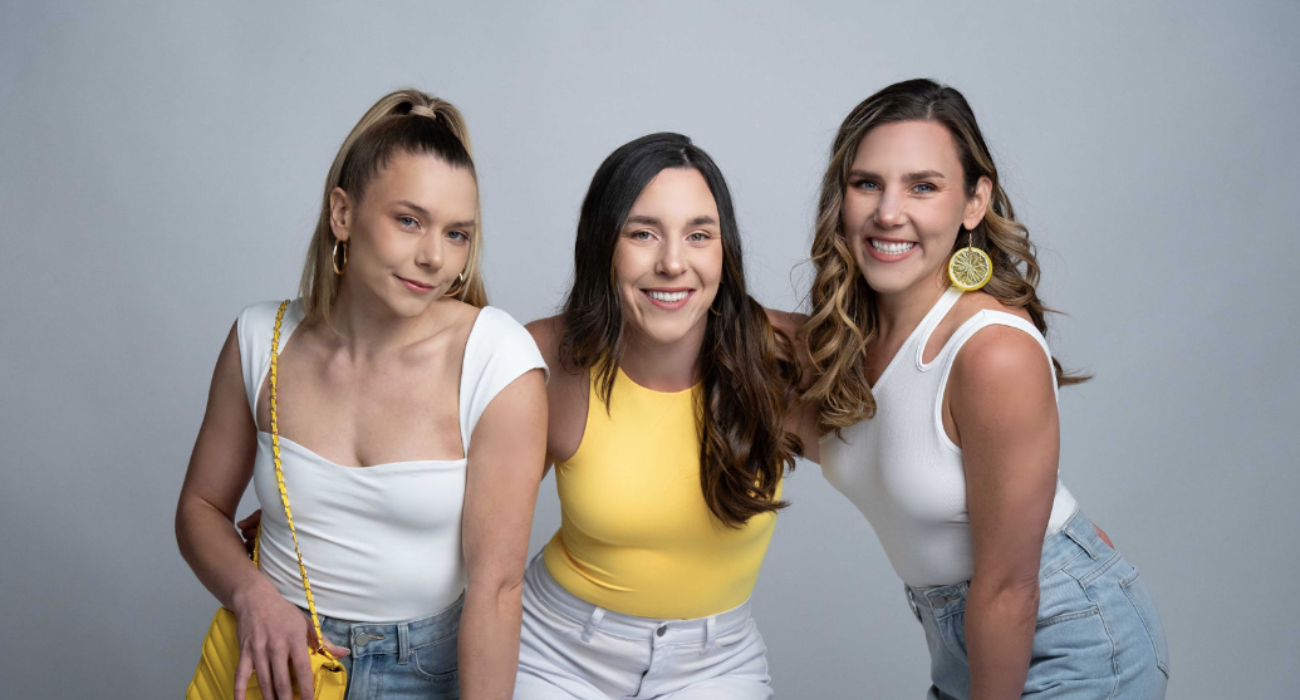
    What if the life you want isn’t something you earn after success—but something you design first? In this deeply personal sisters episode, Unconventional Life host Jules Schroeder sits down with her sisters Raya Slavin and Mary Schroeder to unpack identity, money, magnetism, and lifestyle freedom.

    This conversation is for creatives, entrepreneurs, and visionaries who feel stuck between who they are and what they’re “allowed” to want. It matters because freedom isn’t just financial—it’s nervous-system safe, identity-aligned, and built to last.

    Main Topics Covered

    • The “starving artist” myth and how it quietly shapes identity
    • Identity + income collisions and why visibility feels unsafe
    • Nervous system regulation as a prerequisite for sustainable success
    • Designing lifestyle first, then building business backward
    • Magnetism, congruence, and authentic branding
    • Lifestyle freedom vs. hustle culture
    • The role of family, community, and creative support
    • The origin and mission of Pink Lemon Agency

    Key Takeaways

    • Desire is not indulgent—it’s information and fuel
    • Strategy without nervous-system safety leads to burnout
    • Lifestyle freedom looks different for everyone
    • Visibility becomes possible when identity and income integrate
    • Sustainable success requires structures for fulfillment, not just growth

    Episode Chapters

    0:00 – 3:10 | Sisterhood, Origins & the Birth of Unconventional Life
    Jules welcomes her sisters, reflects on nearly a decade of Unconventional Life, and sets the tone for a family-rooted conversation about creativity, business, and evolution.

    3:10 – 6:05 | The Starving Artist Myth & Identity Conditioning
    Mary shares her journey as a circus artist and how internalized beliefs around money, art, and worth quietly shaped her identity and visibility.

    6:05 – 10:20 | Choosing Safety Over Self-Expression (and the Cost of It)
    Raya explores growing up with “safe career” expectations, suppressing creative desires, and how early web design work with Jules Schroeder opened a new path.

    10:20 – 14:00 | Magnetism, Congruence & Authentic Branding
    The sisters unpack what makes a brand magnetic in a saturated world—and why congruence, family, and creative alignment matter more than tactics.

    14:00 – 17:40 | Lifestyle Freedom vs. Hustle Culture
    A deep dive into designing life before business, reversing the grind-first model, and redefining success beyond money and optics.

    17:40 – 24:55 | Nervous System, Visibility & the Zone of Turbulence
    Identity meets income as they discuss nervous system regulation, fear of being seen, charging for gifts, and learning to hold expansion without collapsing.

    24:55 – 40:30 | The Business of Being You & Riding the Wave
    From handstands and toilet paper rolls to surfing metaphors and legacy-building, the episode culminates in a call to act, trust timing, and live an aligned, unconventional life.


    One-Liner Quotes

    • Mary Schroeder: “Desire is the most powerful current and currency we have.”
    • Raya Slavin: “Visibility is safe when it’s free—charging brings identity online.”
    • Jules Schroeder: “What if you engineered your lifestyle first and built the business backward?”

    Connect with the Schroeder Sisters

    Jules Schroeder:

    Raya Slavin:

    Mary Schroeder: