
If you have ever felt like you are doing “all the right things” and still crashing, this episode will feel like someone finally put language to the chaos.
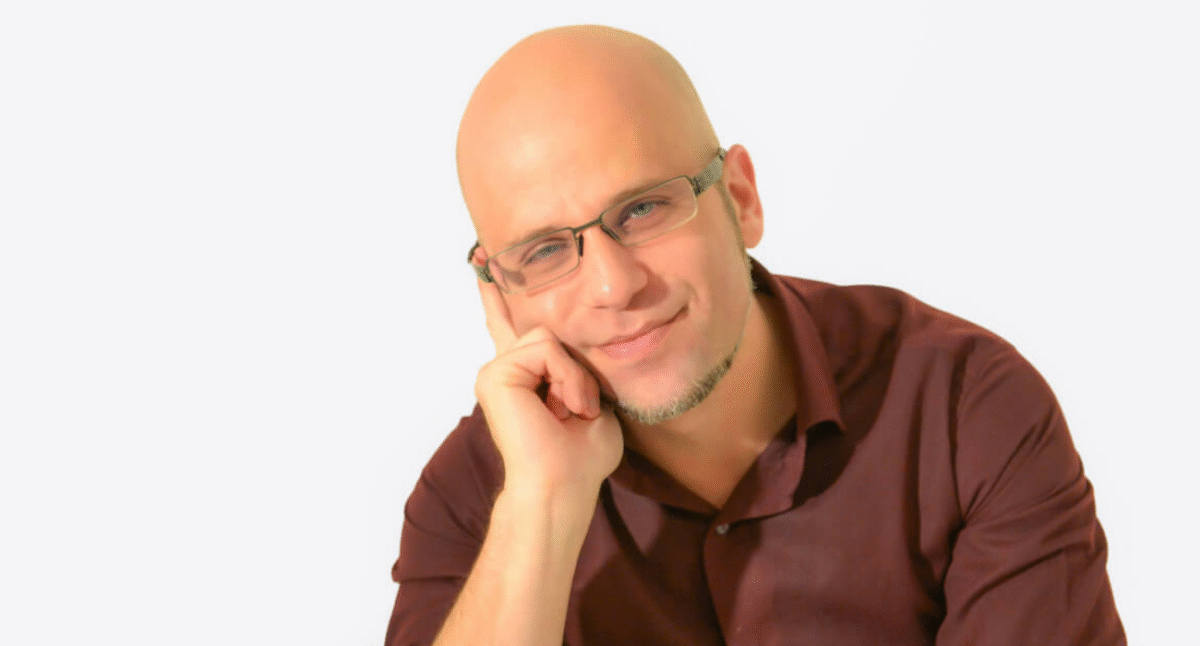
In this in-studio conversation, Jules Schroeder sits down with Dr. Sam Shay, a functional medicine expert (and stand-up comic) who has spent 25+ years helping people get out of survival mode.
Together, they unpack the missing piece in modern wellness: not more protocols, not more gadgets, not more supplements—an actual map.
Because without a map, even the best tools get misapplied.
In This Episode, You’ll Hear
- Why biohacking can be more overwhelming than helpful without a roadmap
- The difference between Western medicine and functional medicine—and why both matter
- Dr. Sam’s “10 Pillars of Health” framework to identify what’s really breaking down
- The 5 lab categories that help you stop guessing and start prioritizing
- Why inflammation is often the “master switch,” and how genetics can reveal your pattern
- How mold, toxins, and hidden infections can stack and trigger flare-ups
- The overlap between sensitivity, neurodivergence, stress load, and chronic inflammation
- Why an unconventional life includes both superpowers and kryptonite
The Big Theme: Tools Don’t Work Without a Map
Dr. Sam describes a common trap: people discover functional health, then immediately get hit with an endless menu of interventions. It becomes a cycle of:
practitioner → protocol → product suite → hope → disappointment → repeat
Not because the tools are bad, but because the tools are being used without context.
He emphasizes that the transition window (roughly 35–55/60) is when people are most likely to start asking: “I built the life… but do I have the health to enjoy it?”
That is where his idea of health freedom comes in—the freedom that makes time, money, purpose, and relationships actually enjoyable.
Jules’ Story: When the Lights Went Off
Jules shares a powerful personal experience of being diagnosed with autoimmune issues and a reactivated Epstein-Barr virus, alongside early MS-like symptoms. What made it especially confusing was that she felt she was already living a “healthy” life—until her body suddenly wasn’t.
Her turning point was finding a practitioner who could offer a model: a way to make sense of the symptoms and prioritize the path forward.
That sets the tone for the entire episode: the real danger is not having answers—it is not having a structure for deciding what to do next.
Functional Medicine, Simplified
Dr. Sam defines functional medicine as:
the best of Western lab diagnostics + the best of natural medicine lifestyle tools
He also explains the difference in “medical mission”:
- Western medicine was built on triage (crisis → stable)
- Functional medicine is built for optimization (chronic → normal → optimal)
He is not anti-Western medicine. He is anti-misuse.
His question is simple: Is it safe? And does it work?
The 10 Pillars of Health (The Lifestyle Map)
One of the most useful parts of this conversation is the framework Dr. Sam built after years of working with chronically ill clients (especially women).
His “10 Pillars” are designed to show what is collapsing—without getting stuck in symptom-chasing.
He lists the pillars as:
- Brain
- Bowel
- Body
- Burst exercise
- Biotoxins
- Bionutrients
- Breakfast
- Bothers (stress/trauma load)
- Bugs (infections)
- Bedtime (sleep)
His clinical observation is blunt and clarifying:
Most chronically struggling people have at least 7 out of 10 pillars crumbling. And most protocols only address 1–3 pillars well.
So yes—you might be “healthier on paper,” but still feel stuck.
The 5 Lab Categories (The Lab Map)
Dr. Sam pairs lifestyle with labs so you can see the problem from two directions:
- Lifestyle = outside-in
- Labs = inside-out
- Both together = a fuller picture (holistic)
His five lab categories:
- Gut (comprehensive gut testing, SIBO/SIFO considerations, food intolerances)
- Hormones (thyroid, adrenals, sex hormones)
- Mitochondria + metabolic basics (mito function + CBC/CMP/blood sugar regulation)
- The “weird stuff” (mold, metals, environmental toxins, hidden infections like Lyme/Epstein-Barr)
- Genetics (but only if it’s prioritized and actionable)
Where to Start If You’re Overwhelmed
If you can’t do everything at once, Dr. Sam recommends a surprisingly practical starting point:
Start with genetics
Why?
- It is a one-time test whose results apply for life
- It can reveal your “no-go zones” (diet/lifestyle triggers)
- It can point to nutrigenomic needs—nutrients that can shift gene expression patterns, not just generic nutrition advice
He also warns about genetics reports that dump hundreds of results with no prioritization—because that often leads to overwhelm, confusion, and paralysis.
Inflammation: The “Master Switch” Conversation
One of the strongest threads in the episode is inflammation.
Jules shares that focusing on lowering inflammation created a domino effect for her health—especially after mold exposure and strange immune reactions.
Dr. Sam adds an important reframe:
Inflammation has a purpose:
- repair tissue damage
- fight infection
But when your inflammatory system is genetically “high-alert,” modern life can become the wrong environment for your wiring.
He explains the evolutionary tradeoff:
- strong inflammation can help you survive acute injury faster
- but can increase risk for chronic inflammation over time
Translation: your genes aren’t “bad.” They may simply be mismatched to the current terrain.
Sensitivity, Neurodivergence, and Stress Load
Jules asks about hypersensitivity and neurodivergence, and Dr. Sam offers a compelling explanation:
- There may be emerging genetic overlaps involving inflammatory pathways
- But there is also the lived reality of sensory load
He explains a theory around reduced “synaptic pruning” in autism spectrum brains—meaning sensory input stays wide open: sounds louder, lights brighter, touch more intense.
That constant overwhelm can create chronic stress, which can then suppress immune function and amplify inflammation.
A Unique Twist: Comedy as Advocacy
Dr. Sam’s work is both deeply technical and deeply human, and humor is part of his medicine.
He shares his stand-up show concept, designed to be both accessible and educational, and offers an on-the-spot excerpt that perfectly captures how his brain works: analytical, literal, caring, and unintentionally hilarious.
It is a reminder that healing is not only about protocols. It is also about becoming understandable to yourself again.
Key Takeaways
- Tools are not enough. You need a map.
- Western medicine and functional medicine have different goals—and both can matter.
- Chronic issues often involve multiple “pillars” collapsing at once.
- Labs and lifestyle together create a clearer decision-making framework.
- Genetics can be a powerful first step when you need lifetime clarity and prioritization.
- Inflammation is not just a villain—it is a system that can become miscalibrated.
- Sensory overwhelm and chronic stress can be physical drivers, not personality flaws.
Connect with Dr. Sam Shay
- Spiritual Fxckboy Podcast:
- Instagram: https://www.instagram.com/spiritualfxckboy/
- Website: https://benjamenduffy.com/
 Connect with Jules Schroeder
- Unconventional Life: https://www.unconventionallifeshow.com/
- Website: https://julesschroeder.com/
- Instagram: https://www.instagram.com/julesschroederlife/