Unconventional Life – Podcast, Blog, Live Events

Author: Jules Schroeder

  • Ep268: Creating a New Identity, with Holistic Nutritionist and Hypnotherapist Melissa Kathryn

    Ep268: Creating a New Identity, with Holistic Nutritionist and Hypnotherapist Melissa Kathryn

    We know ourselves more than anyone, and often we need to be reminded to take our time to listen to our own thoughts. In our talk with Certified Nutritionist and Hypnotherapist Melissa Kathryn, she takes us for a quick meditation session and guides us to “let the answers in” as our conscious thoughts step back and we ask our bodies about how to solve our fears.

    Melissa shares with us the MK method which she has been following and teaching people in order to change their lives, whether it be an issue with weight, diet, or general emotional and trauma healing. She describes it as a holistic approach that really strikes a problem to its core.

    “MK method is about creating a new identity and understanding what your gaps are,” Melissa said, “something that I teach is where there’s lack, you’ll fill the gaps with x. [For example] where there is lack, you’ll fill the gaps with food. So, wherever we experience lack within ourselves, and within our thinking and within our being, knowing that we’re not enough now, we will end up filling those gaps with whatever it is.”

    For Melissa, change isn’t simply about education and health, it’s also about empowerment; she points out that our actions are dictated by our minds and these decisions affect our body and how we live our lives. Sharing her own story, Melissa notes that even as a nutritionist she still bounces back to unhealthy routines.

    “I got the weight back at the same length of time I took to get it off,” she says “so clearly something’s missing. And I was just on the floor of my New York City apartment, binging on Quest Bars, felt sick to my stomach. I was like why would I do this to myself? This clearly [shows] I don’t love myself because I’m putting myself in pain and I’m not living my best life.

    “I started really looking at my mind and started realizing that all of this had nothing to do with food but my relationship to myself and my mindset.”

    She shares that the beauty of her work is when she gets to empower women through her coaching and her story of surviving cancer but she notes that people also need to realize that they can look within to find their own answers and be their own inspiration.

    “You don’t need an astrological reading to tell you that your desires on your heart are meant for you,” she stresses, “you got to give yourself permission to live your best life now.”


    More from Melissa:

  • Ep267: Having Contagious Self-Love, with Life Coach and Author Carla Romo

    Ep267: Having Contagious Self-Love, with Life Coach and Author Carla Romo

    The topic of love is probably a subject that speaks to everyone. Whether it be a Valentine’s Day gift retailer, or TV and movie plots, love is something all of us have or want to experience; it changes us and makes us do the dumbest things, and sometimes we look for it so much that we lose ourselves in the process.

    For certified life coach and Contagious Love author Carla Romo, the field of Love isn’t as pretty as Hollywood makes it and often it requires a lot of self-work. To find it, one needs to not only “get over” emotional scars but also be empowered in loving themselves.

    Learning from experience, she now empowers lots of hopeful romantics to put themselves first and not go down this path of self-sabotage in hopes of being loved. Carla shares with us three tips that we can use to start loving ourselves more and not settle for toxic relationships.


    Know the story you’re telling yourself.

    Carla advises that one should give themselves a moment of quiet and “Listen to your damn gut.”

    It’s in this crucial silent space that one tends to feel lonely but this is also an opportunity to ask yourself how you really feel and what are the fears underneath that thought.

    She encourages the use of positive vocal affirmations either in front of a mirror or random sticky notes around our homes that remind us to say positive “I am” statements.

    “Practicing these little interruptions through our everyday hamster wheel spins can start to get you into a place of self-love,” Carla stresses, “and fair warning, it might feel really cheesy at first but psychologists have proven through studies that the more you practice affirmations, your brain rewires and starts to believe them.”


    Create Space for your feelings.

    It’s not easy balancing work and your personal life, especially now with the pandemic forcing us to stay indoors and work from home, but Carla encourages us to “feel our feelings” and not distract ourselves from the emotional pain. She says to clearly define our intentions and not deny ourselves that space to grieve.

    “What kind of screws people over, is when you don’t allow that space, so actually, you bring those feelings with you to your next relationship,” she says, “if you don’t allow yourself to process that, you still have a ball of yarn tangled up inside of you that is trying to tease itself in the next relationship.”

    She advises that one should at least give themselves 3 or 4 months to go through all the stages of grieving before attempting love.


    Don’t paint Red Flags green.

    Often, we know the traits in a partner we are looking for, but it’s our personal feelings that cloud our judgments, this is what Romo referred to as self-sabotage—choosing someone out of insecurity and our desperation for love.

    Carla encourages us to listen to that guiding voice and not ignore the signs of a toxic relationship.

    “It was so easy to do before in the past,” Carla shares, “but the reason that I didn’t paint them green [now] is because I’m okay with myself. I didn’t need that validation; I didn’t need to force a relationship because I felt okay just being single.”

    Romo told that a codependent toxic relationship from childhood led her down a path of self-sabotage that she hadn’t realized until she was 24. It was during a stressful time in her life that she decided to travel to Ireland on her own to find some peace, and it was in the quiet that she came to understand something.

    “I saw two paths in front of me,” Romo said, “and I knew that I’d be okay no matter what I chose, but the two paths were: One, continue self-sabotage continue to be with this type of person—even if you broke up with them and just keep going and not doing that inner work, or two, break-up with that person, do that inner work, love myself, learn how to communicate what my needs are, and heal.

    “So, I got back to Los Angeles and I ended that relationship because I realized the most important relationship I had was with myself.”


    More from Carla:

  • Ep266: Bars and Brainwaves, with Myndlift CEO and co-founder Aziz Kaddan

    Ep266: Bars and Brainwaves, with Myndlift CEO and co-founder Aziz Kaddan

    Growing up with a pediatric neurologist as the man of the house, it’s no surprise that neuroscience would be a common topic at the dinner table of Aziz Kaddan’s childhood, and why he found himself years later in the same branch of science.

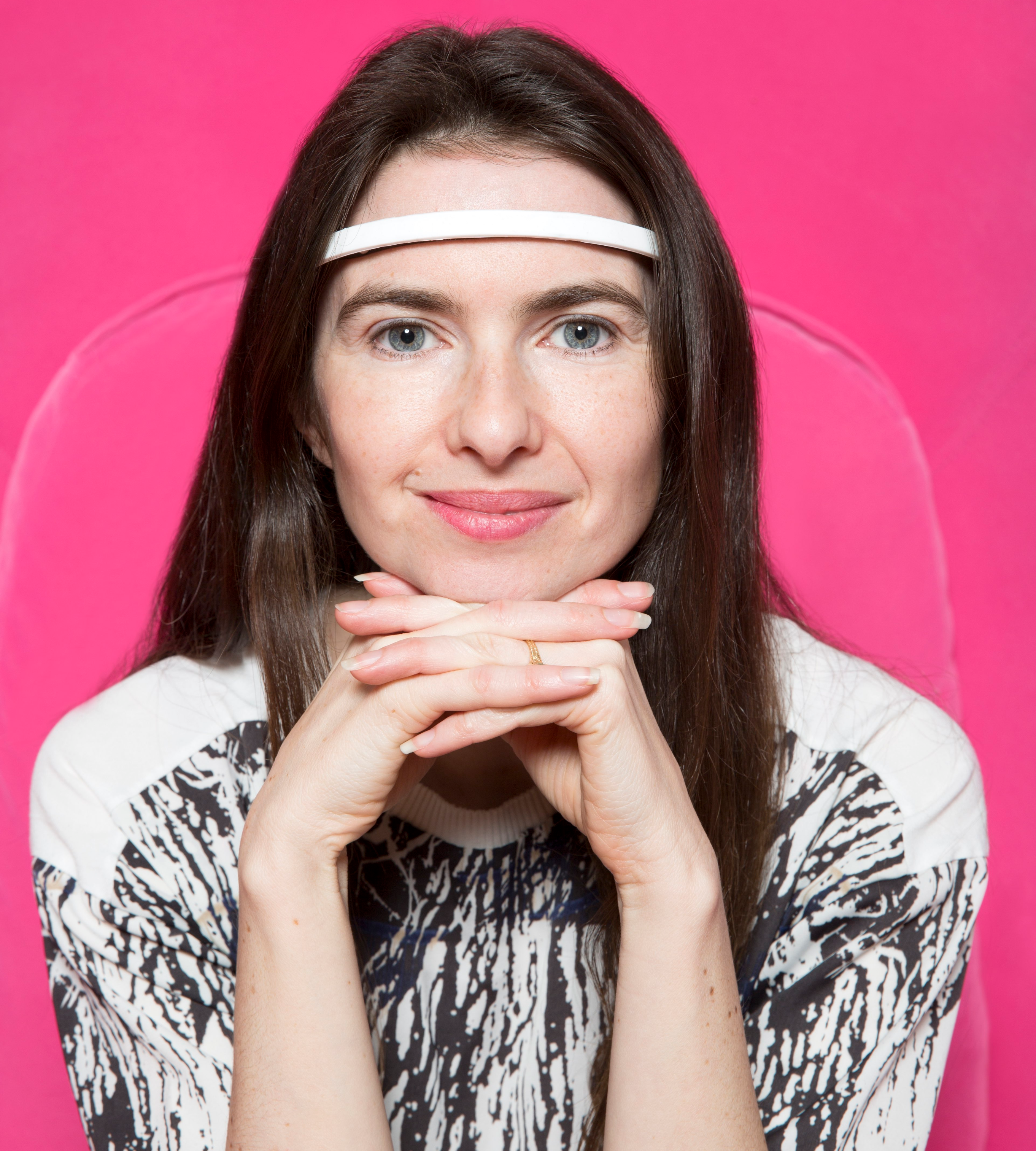
    At an early age, he was exposed to the topic of mental health and conditions particularly ADHD. He witnessed how his two siblings were examined by their father, and how much they rejected the medication that he gave them. As research in neuroscience expanded over the decades and therapy improved, Aziz now finds himself as the CEO of Myndlift, and building on the breakthrough that is Neurofeedback.

    To simplify, Aziz explained that “Neurofeedback is based on something called Operant Conditioning. Whenever you do a certain action, you get a reward or a no reward, and if you get a reward immediately after doing that action, that action or that behaviour is being reinforced, right? So if you’re rewarding a baby, for example, whenever they do a specific behaviour over and over and over again, at some point they’re going to do that behaviour more and more naturally.”

    This was the culmination of the research put into measuring brain activity which allowed for the non-invasive undertaking of sending frequencies to parts of the brain, which paved the way for therapy that improved actions like focus and treat conditions that affect the brain like ADHD and depression.


    Starting the Start-up

    Despite its effectiveness, Aziz acknowledges that it is yet to go mainstream, “Other than the high costs associated with it, the need to visit the clinic so often made it something that is sort of a last resort for many people,” he says, “you would prefer to take medication rather than stick to 60-day training regimen with therapy.

    “I tried it myself and it helped me. I know the benefits of research, why is it not accessible? So we worked super hard on making it accessible by using wearable technology and mobile technology and just providing it from home.”

    It was this idea that led Aziz and his co-founders to quit their jobs in 2014 and fly from Tel Aviv to a technology accelerator in Boston. It was a difficult journey educating investors and it took almost 10 months of work to make the first dollar for their start-up, but they persevered.

    Now their compact Myndlift technology and software are being used in hundreds of clinics globally, inching their way closer to making this groundbreaking treatment a mainstream option in the field of mental health.


    Rhymes and Relaxation

    Having experienced the difficulties of being a new entrepreneur, Aziz encourages other dreamers, and aspiring CEOs to not forget about themselves in this painstaking process of growth, as their mental health is equally important as their goals.

    “At the end of the day,” Aziz says, entrepreneurs are very prone to suffer from depression or anxiety due to the difficulty of what they’re doing—you’re alone, you’re building something big. Every day is a struggle and you don’t have somebody telling you what to do—you have to figure it out by yourself, all of these factors can be daunting. For example, if you’re funding for a big idea, and you have, you fully believe in that idea, your mom also believes in it [but] when you go to investors and they tell you well this will never work, or you’re getting rejection after rejection after rejection that can take a toll on your mental health.

    Aziz shares that it’s hard to push through with projects when you’re dealing with internal burdens, so he suggests that from time to time, entrepreneurs take a day off to pursue other projects.

    “I really recommend to every single entrepreneur out there that are just starting out, have an artistic project, whether it’s singing, drawing—whatever it is, because when you have such a project where you create something, and you’re not dependent on people—vying for the market or investors and it’s just your creation that you fully control in your own world, on the weekend. It just gives you that break that you desperately need.”

    For Aziz, music and the lyrical world of rap was his part-time project outside Myndlift, and the CEO himself writes his own rhymes from time to time as his way of clearing his head.


    Science and Stigma

    Even though they have made treatment for mental health more accessible, Aziz acknowledges that the stigma of mental health treatment is still there. Many countries and parts of our communities are still associating it with disability and jumping to uneducated conclusions on the topic of mental conditions, but there are noticeable signs of acceptance in more areas.

    He says that during this time of COVID-19 where many of us are stuck at home, many are starting to see the importance of mental health.

    “[At times] I’m interviewing candidates who want to work at Myndlift and I’m noticing a lot of openness,” Aziz shares, “people are telling me ‘look I really connect with this company because I’ve suffered from a mental health issue, and I think I’m still suffering’ they know that I’m not gonna pass judgment. And so, that’s the beautiful thing that’s happening right now and I hope that this continues to grow.”


    More from Aziz and Myndlift:

  • Ep265: Knowing the Whys Behind the Whats of Success, with Naked Underwear co-founder Joel Primus

    Ep265: Knowing the Whys Behind the Whats of Success, with Naked Underwear co-founder Joel Primus

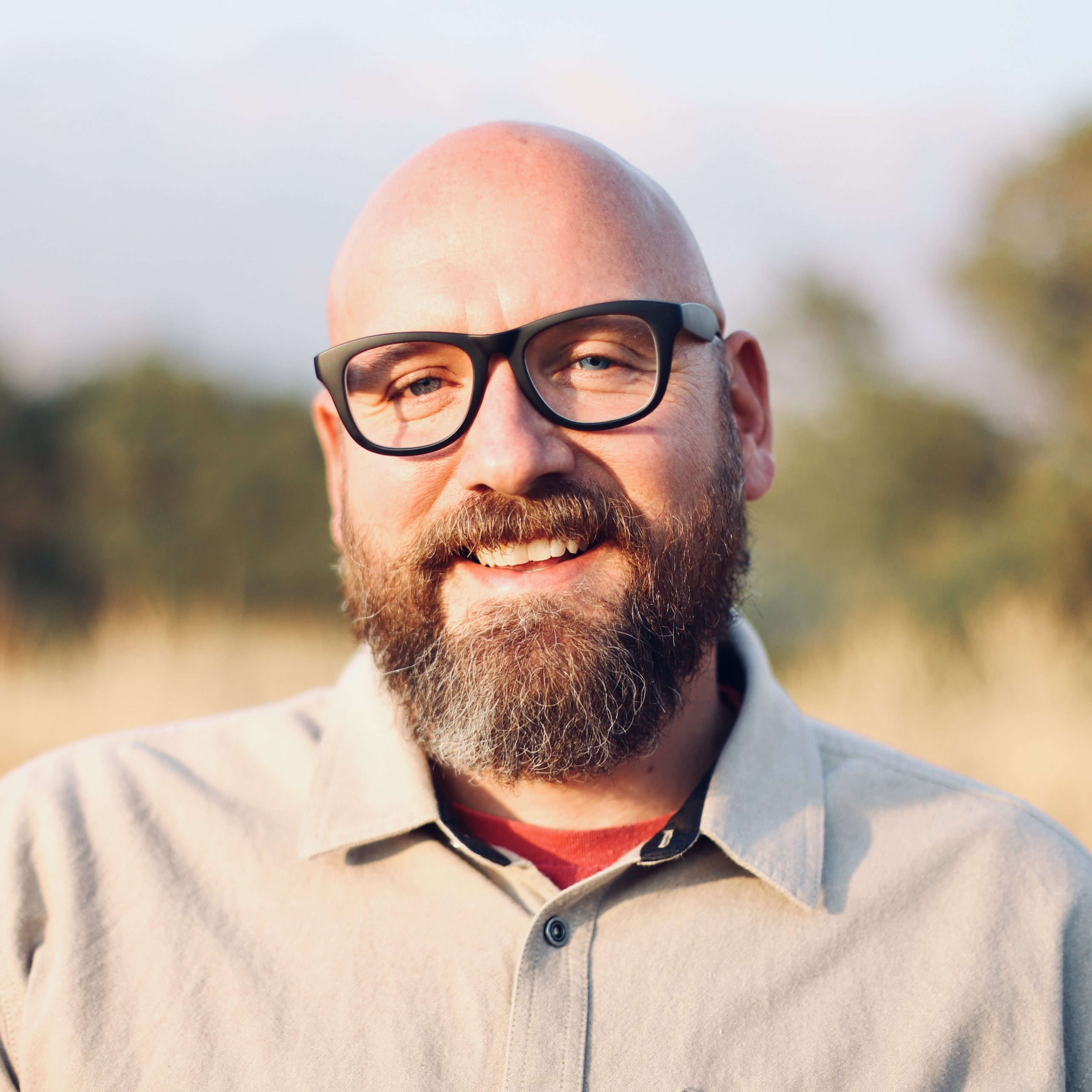
    On a farm in the countryside is the last place you would think of to find entrepreneur and business coach Joel Primus. Having made a fortune from the Naked Underwear clothing brand—which he started from the comforts of his own dining table—the successful businessman is now in the process of stripping away his attachments and looking inward to know his true self.

    Under all the fancy suits and business trips, the pains of growing a company from scratch take a tremendous toll on one’s physical and mental health, and for Naked Underwear to become what it is today, Joel went through stress and fatigue that resulted in his hospitalization, and nearly ended his marriage as well hurting his relationship with his daughter.

    Despite the joy of growing the company from scratch, Joel says that his journey with Naked caused a lot of anxiety and depression. This contributed to his new mindset of stepping back and realigning with his internal foundations.

    “For the last few years,” Joel says, “Naked, at the end of the day, broke me. I was very anxious and depressed at the end of it. So I had to do a lot of inner work to kind of get the foundation back in a place where I could springboard into whatever was next. I haven’t figured it all out, but that’s why we’re out here, we’re, we’re looking for ways to lessen what we do, and do it better.”

    Joel describes that his current path for growth isn’t about acquiring more but rather stepping back and letting go.

    Though he is still chasing success and still not straying far from the business field, he is now being more cautious and is encouraging people not to divide themselves between work and life.

    “I reconcile this constant drive to be successful and this inner desire for peace,” he says, “the spiritual Joel and the entrepreneurial feel very dualistic, and but [in truth they’re] two manifestations, within one whole relationship. They’re not separated, and when we will feel the happiest in how we live our lives is when those two things actually form into one and we don’t feel like we’re Jekyll and Hyde all the time.”

    He advises that when they reach this sinking feeling of anxiety and depression because of their work, they should reexamine and know “the whys behind the what”

    “We’re most self-destructive when we’re operating without knowing why we’re operating that way,” he says, “if we can understand our why’s for a lot of the things we do, it doesn’t mean we stop doing it, but we’re operating from a much clearer space.”

    Joel values this inner reconciliation of himself and is encouraging people to not just find the middle ground but to truly be happy with everything that they put their effort in.

    “It’s about holistically, living our lives in a way that makes us feel fulfilled and enjoying what we do—not always looking for the next, and the collateral damage that comes with that.”


    More from Joel:

  • Ep264: Choosing Peace Amidst Chaos, with The Angel Coach, Emily Rivera

    Ep264: Choosing Peace Amidst Chaos, with The Angel Coach, Emily Rivera

    To say that 2020 was a rough year would be an understatement, and 2021 hasn’t been exactly the year where the rainbow has appeared after the storm, however with everything that we’ve lost we’re encouraged to not just cry over the confusion and pain brought by the pandemic but also value that which stayed—treasure the things that 2020 didn’t take away.

    “Love and gratitude are the same frequency; they’re just labelled differently by the human mind,” that is according to influencer and Angel Coach Emily Rivera. Having met her first master at the age of five, she is constantly visited by Divine manifestations who show her visions and messages that she shares with others. She is now teaching others to listen to the guides—she refers to as the Saints of Light—to see beyond the panic and experience clarity in their life.

    Being also a mother to a daughter with a disability, her strength was tested when her child had a medical episode that stopped her breathing and sent Emily to intense panic.

    As the medical staff moved to make an incision on the girl, Emily saw the moment slow down to almost a halt and felt energy shower her at that moment.

    “I felt very lost in that moment,” Emily said, “like I can’t survive this and that energy moved down and I remember hearing this beautiful whisper: ‘You can choose to feel the peace that’s here now’. And at that moment I was being reminded that even though there was chaos—and I felt the chaos and I was in that chaos and I was witnessing the chaos and feeling it and being completely in it—I still had a choice to see the peace”

    As she took her daughter’s hand to her heart and said that she chooses peace, the doctors declared a miracle and the girl started breathing again.

    She learned from her guides that people are far more than what we see; more than just humanity “We are this vastness of light and impossibilities” and everyone shares the same divinity as them.

    “They’re just a reflection of who we are, that if I can take my human skin off and I could just be free from the idea that I’m human, I would see the same presence that was standing in front of me as myself.”

    Using her platform, Awakened Superhuman, she collaborates with other educators and teaches others to listen to their guides and be more comfortable in saying “Yes” because as it was told to her, “You are inevitable.”

    Despite how dark these past days may have been, Emily still encourages people to constantly be grateful, listen to their guides, and trust what they feel is right.


    More From Emily: