
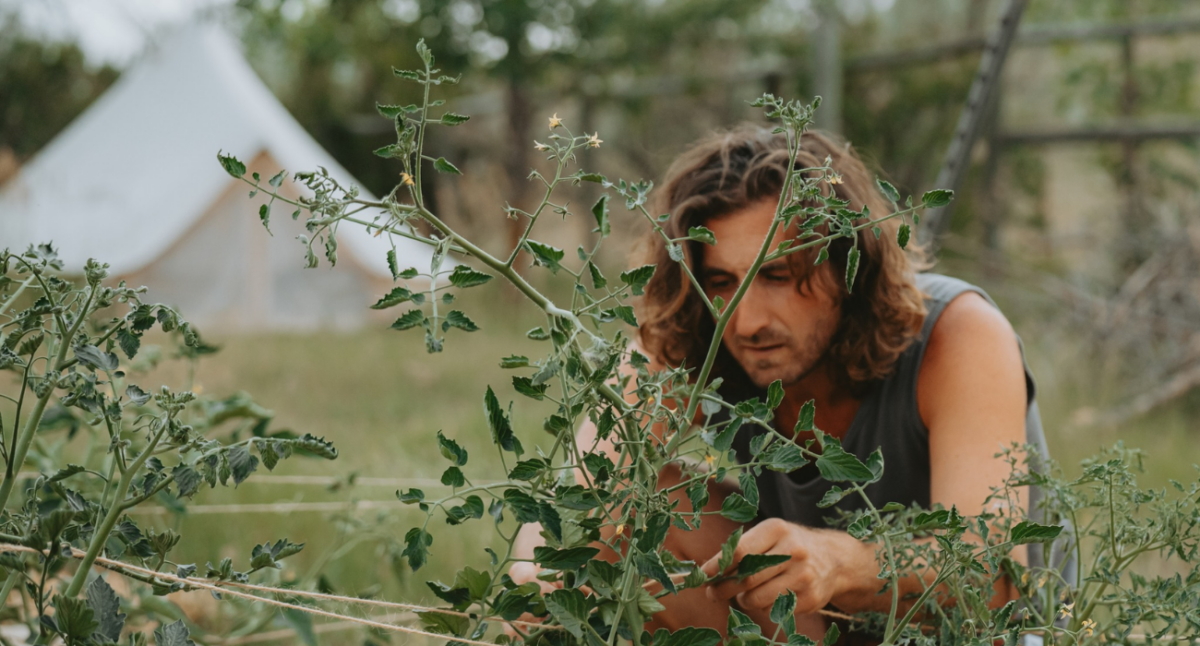
From the outside, Yoshua Greenfield was living the dream.
New York City. Creative momentum. A growing audience. A successful YouTube cooking show. Brand deals. Visibility. The kind of life many spend years chasing.
But internally, something wasn’t adding up.
Despite the traction, Yoshua found himself increasingly disconnected—from his work, from others, and from himself. The success he had worked toward began to feel more like performance than purpose.
“At a certain point, I realized I was building something that didn’t actually feel like me anymore.”
What followed wasn’t a pivot. It was a full reset.
The Hidden Trade-Off of the Attention Economy
As Yoshua’s platform grew, so did the pressure to maintain it.
What once felt like creative expression slowly became shaped by algorithms, expectations, and external validation. The more attention he received, the more he felt pulled away from authenticity.
This is the paradox of the modern creator economy: visibility often comes at the cost of truth.
Instead of deepening connection, success can dilute it—turning creators into curated versions of themselves.
For Yoshua, the realization was clear: he didn’t want to optimize for attention. He wanted to live in alignment.
So he made a decision most wouldn’t.
He walked away.
Burning the House Down
Yoshua describes this chapter of his life with a powerful metaphor: “burning the house down.”
Not out of destruction—but out of honesty.
He let go of the identity he had built. The business. The environment. The expectations. Even the version of himself that others recognized.
He left New York City and moved west, eventually landing in Colorado with no clear roadmap—just a knowing that something needed to change.
It was a move away from certainty, toward something far less defined—but far more real.
Trading Speed for Rhythm
The transition from city life to land-based living wasn’t seamless.
Yoshua didn’t arrive in Colorado with experience in farming, homesteading, or self-sufficiency. In fact, he describes making “every mistake possible.”
What he did bring with him—ambition, urgency, and a desire to “figure it out quickly”—quickly dissolved.
“The land doesn’t respond to force,” he realized. “It teaches you patience.”
Instead of operating on deadlines and deliverables, he began to live in cycles. Seasons. Natural rhythms.
Growth became less about scaling—and more about attunement.
Food as a Portal to Presence
While Yoshua had built a career around food, his relationship with it transformed entirely.
Food was no longer content. It became practice.
A way to slow down. To create. To connect.
He began fermenting, preserving, sourcing locally, and preparing meals with intention. What once might have been seen as “complex” was actually rooted in simplicity—repeated daily.
In contrast to modern food culture—defined by excess, speed, and aesthetics—Yoshua embraced a more grounded philosophy:
Food is not performance. It’s participation.
The Myth of Self-Sufficiency
Despite appearances, Yoshua is quick to challenge one of the biggest misconceptions about this lifestyle.
This isn’t about doing everything alone.
“Self-sufficiency is a myth,” he explains. “Community is the goal.”
Rather than isolating himself, Yoshua found deeper connection—through local farmers, shared resources, and collaborative living.
What emerges is a modern version of an ancient system: the village.
Each person contributes something. No one does everything.
The Second Mountain: A Different Kind of Success
Yoshua’s journey reflects a broader shift many high performers eventually face.
The first mountain is about achievement—money, status, recognition.
The second is about meaning.
What he discovered is something rarely spoken about: by the time you reach the goals you once wanted, you may no longer want them.
Not because they’re wrong—but because you’ve changed.
And in that space, a new question emerges:
What actually matters?
Why Tangible Skills Matter More Than Ever
In an increasingly digital and AI-driven world, Yoshua points to a growing desire for something real.
People want to feel capable again.
To create with their hands. To understand where their food comes from. To engage with the physical world in a way that feels grounding and human.
These aren’t just hobbies. They’re a form of resilience.
Because while technology continues to evolve, the ability to create, grow, and sustain in the real world remains deeply valuable—and deeply fulfilling.
Returning to What We Already Know
One of the most powerful moments in Yoshua’s journey came through an unexpected experience: processing his first deer.
With no prior training, he found himself moving through the process instinctively.
“It felt ancient. Like something my body already knew.”
This idea—that much of what we’re seeking isn’t new, but remembered—runs through his entire philosophy.
Modern life hasn’t erased these instincts. It’s just buried them.
How to Start Without Overhauling Your Life
Yoshua doesn’t position this path as all-or-nothing.
You don’t need land. Or a full lifestyle reset.
You need curiosity.
Start small:
- Learn to ferment
- Visit a local farm
- Cook more meals at home
- Build relationships with producers
- Follow what genuinely interests you
The goal isn’t perfection. It’s participation.
The Real Work: Living Without the Mask
At its core, Yoshua’s journey isn’t about leaving the city or growing food.
It’s about truth.
Letting go of identities that no longer fit. Choosing alignment over approval. Trusting that what feels right—internally—matters more than what looks right externally.
It’s not always clean. Or comfortable.
But it’s real.
And in a world built on performance, that might be the most radical choice of all.
Giveaway
Yoshua is giving away a free copy of “Fermenting with Your Best Friend” — your beginner-friendly guide to fermentation and reconnecting with food.
Connect with Yoshua:
Website: https://youenjoy.life/
Buy his book: Fermenting with Your Best Friend
Instagram: instagram.com/youenjoylife/
YouTube: You Enjoy Life