
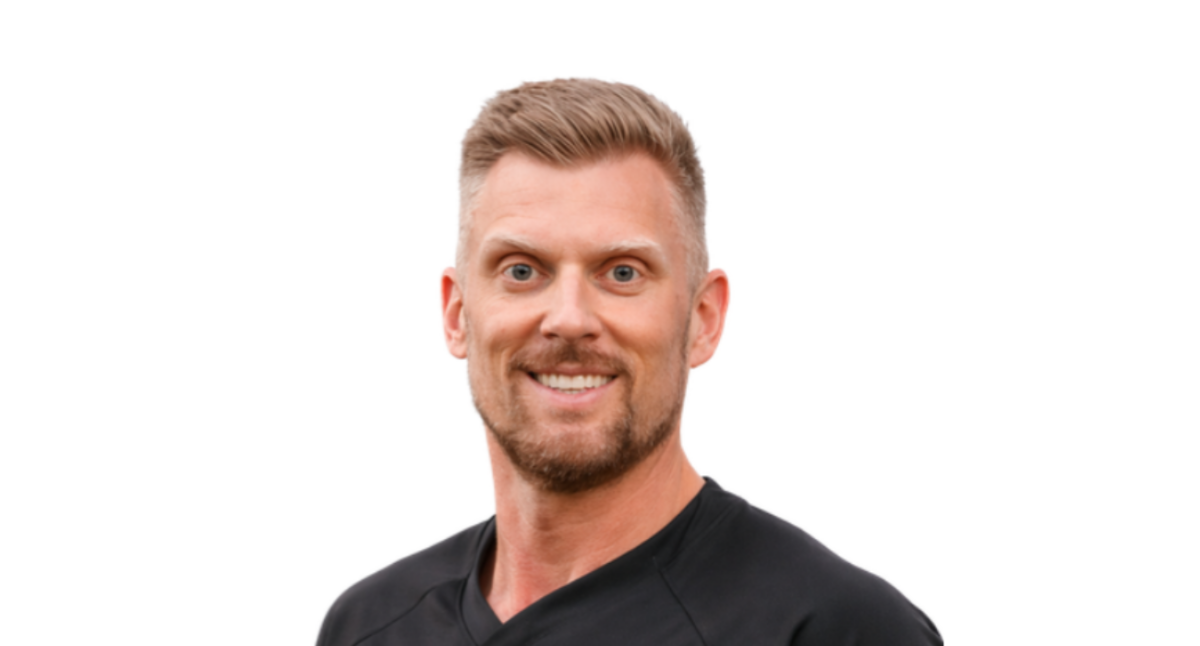
The physician, entrepreneur, and founder of Whole Men’s Health is helping men rethink success, reclaim their vitality, and build healthier lives without sacrificing the people and priorities that matter most.
Success has a way of disguising its costs.
A growing business, a thriving career, a family to provide for, and a reputation for getting things done can make life look extraordinary from the outside. Yet behind the achievements, there may be exhaustion, declining health, restless nights, and a nagging feeling that something important has been lost along the way.
For Dr. Stephen Sanders, this was more than a pattern he observed in his patients. It was his own reality.
A physician by training and an entrepreneur at heart, Sanders had spent years building a successful medical practice while fulfilling his responsibilities as a husband and father. By conventional measures, he was doing well. But in his late 30s, he reached a point where the life he had worked so hard to build no longer felt sustainable.
Today, as the founder of Whole Men’s Health, he helps men address the health concerns that often remain hidden behind professional success and personal responsibility. His work spans hormone optimization, sexual health, metabolic health, performance, and longevity, with a broader mission to help people preserve their energy, strength, confidence, and independence as they age.
His philosophy is rooted in a lesson he learned the hard way: the best days of a man’s life do not have to end at 35. But enjoying those years requires more than ambition. It requires learning how to take care of the person behind the achievements.
The Photograph That Forced Him to See What Success Was Costing Him
Before building Whole Men’s Health, Sanders spent his first decade in traditional private practice. He worked in primary care, wound care, addiction medicine, and consulting, steadily growing his professional experience and practice.
He was also working 15 to 16-hour days.
At the time, he measured success through familiar metrics: the number of patients he saw, the revenue his practice generated, the opportunities he pursued, and his ability to provide for his family. He was focused on building something meaningful, but somewhere along the way, he stopped paying attention to what that pursuit was doing to him.
In his late 30s, he began to believe that his best days were behind him rather than ahead of him. The thought was frightening, especially when he considered how much of his life was supposedly still in front of him.
Then came a family trip to Leadville, Colorado.
While biking with his children at an elevation of approximately 10,000 feet, one of them took a photograph of him. When Sanders looked at the image, he barely recognized himself. He was about 60 pounds overweight, and his face looked exhausted and lifeless.
He was supposed to be in his prime. Instead, he saw someone who looked worn down by the very life he had worked so hard to create.
“That was the inflection point for me,” he recalls. “Something’s got to change.”
The photograph became the catalyst for a personal health journey that would eventually reshape his career. He began studying men’s health, longevity, and wellness, applying what he learned to transform his own health from the inside out.
But the experience also revealed something bigger.
If a physician who understood medicine could find himself struggling, how many other men were experiencing the same decline without knowing where to turn?
That question became the beginning of his next chapter.
Becoming Patient One: Why Leaders Cannot Afford to Ignore Their Health
One of the most important lessons Sanders took from his transformation was that professional success could not compensate for neglecting his health.
He had spent years looking after patients while failing to give himself the same attention. His work was growing, his responsibilities were expanding, and his family depended on him. Yet he had treated his own well-being as something he could postpone until he had more time.
Eventually, he recognized the flaw in that approach.
“If I don’t take care of myself, I can’t take care of my spouse, my kids,” he explains. “The team around me is not healthy when I’m not healthy.”
He describes the shift as becoming “Patient One.” Before he could effectively help others, he needed to become the physician who addressed his own health first.
The lesson is particularly relevant to founders, executives, and providers who have built their identities around being dependable. When people rely on you, it can feel irresponsible to slow down. Taking care of yourself may even seem like a distraction from the work you believe you need to do.
Sanders came to understand that the opposite can be true. A person’s ability to lead, provide, and remain present for others depends, in part, on their ability to sustain their own physical and mental well-being.
His experience also challenged the way he defined success. Revenue growth, professional recognition, and productivity were not inherently wrong goals. The problem was allowing them to become the only measures that mattered.
The question was no longer simply how much he could accomplish. It was whether the way he was living allowed him to enjoy what he was accomplishing.
The Foundations That Matter More Than Another Productivity Hack
When Jules Schroeder asks where someone should begin after realizing that their health needs attention, Sanders brings the conversation back to fundamentals.
His own transformation did not begin with an elaborate optimization routine. It began with examining the habits he had neglected.
Sleep was one of them. During his 30s, he had treated rest casually, assuming he could continue operating the way he had in his 20s. His inconsistent sleep patterns eventually became part of the larger picture of a lifestyle that was no longer serving him.
Nutrition was another. Busy days often meant grabbing whatever food was convenient rather than paying attention to what he was eating.
Movement also needed to become a regular priority. Sanders believes people can start by making time for daily physical activity and strength training, even if they have only 30 minutes to spare.
Then there are relationships. Health, in his view, cannot be reduced to physical measurements alone. The quality of our friendships, family relationships, and wider communities also contributes to how we experience life and age over time.
These foundations form the starting point for his approach to wellness: sleep, nutrition, movement, and relationships.
But Sanders adds one more question that gives those habits a larger purpose: What does success actually look like for you?
Culture has plenty of answers. It can tell us to work harder, earn more, grow faster, and keep pushing. But the definition that matters most is the one that reflects an individual’s priorities, values, and circumstances.
Without that personal definition, it is easy to spend years pursuing a version of success that leaves little room for health, family, or fulfillment.
For Sanders, rebuilding his health meant reconsidering not just his habits but also the life those habits were supporting.
Building the Practice He Wished He Had Found
Sanders’ transition into men’s health began with his own frustration as a patient.
When he first experienced symptoms during his personal health decline, he consulted his doctor and requested laboratory testing. His results came back normal. He was told that perhaps he was stressed, depressed, or going through a midlife crisis.
But those explanations did not give him the answers he was looking for.
As he continued his personal transformation, he began to recognize a gap in the care available to men dealing with similar concerns. He wanted to create a practice that could offer the kind of support he had struggled to find himself.
That vision became Whole Men’s Health.
The practice initially focused on in-person care for concerns including hormone optimization, sexual health, erectile dysfunction, and longevity. Over time, it expanded to include telehealth and women’s health, after men began asking whether their spouses could access similar services.
The patients Sanders describes span generations. Some are in their late teens or early 20s, seeking answers about low testosterone, feeling unwell, or struggling to find direction. Others are in their 80s and 90s, looking to preserve their ability to exercise, ski, play golf, and remain independent.
Many are entrepreneurs, a population he understands personally.
Across these different stages of life, Sanders sees a common desire: people want to feel well enough to continue participating in the lives they have built.
He believes individuals need to take ownership of their health, armed with information and data that can help them make informed decisions. That does not mean navigating every concern alone. Rather, it means becoming an active participant in the process instead of assuming someone else will take care of everything.
The business is, in many ways, an extension of his personal story. What began as a search for answers became an opportunity to help others find the support he once needed.
The Longevity Conversation Needs Less Noise and More Clarity
Health and longevity have become increasingly visible topics, bringing with them a growing range of treatments, technologies, and wellness trends.
Red light therapy, hyperbaric treatments, wearable devices, peptides, and whole-body imaging are among the options people encounter as they look for ways to improve their health.
Sanders sees genuine promise in developments across the field. He is particularly interested in emerging peptides, new imaging techniques, and the growing public willingness to discuss health and longevity.
But he also sees a problem: too much information can leave people confused about what they actually need.
His starting point is to establish a clearer picture of individual health through laboratory testing and biomarkers that can be tracked over time. Rather than chasing every new intervention, people need to understand their current health, identify their goals, and determine which steps make sense for their circumstances.
That approach is especially relevant to the conversation around GLP-1 medications and peptides.
During the interview, Schroeder shares an experience with a friend who had lost a substantial amount of weight after taking peptides. She asks Sanders how people should understand the trend, given the conflicting information surrounding these treatments.
Sanders explains that peptides are short chains of amino acids that can signal the body to perform specific functions. GLP-1 medications, he says, have a place for appropriate patients. However, he cautions against treating them as a universal solution.
His recommendation is to begin by asking what someone is trying to achieve and whether the fundamentals of health are in place. Sleep, movement, nutrition, and relationships remain important, regardless of whether a person eventually uses additional interventions.
For Sanders, the problem is not simply whether a particular treatment works. It is whether the intervention is appropriate for the individual and whether people understand the role it should play in their overall health.
The broader principle is straightforward: technology can offer valuable tools, but it cannot replace the need for informed decisions and a strong foundation.
Why Work-Life Balance May Be the Wrong Goal
The conversation takes another turn when Schroeder asks Sanders how he has navigated entrepreneurship, career changes, and family life.
Schroeder shares her own experience of balancing different interests, including music, events, publicity, business, and snowboarding. Sanders recognizes the challenge of trying to make room for multiple parts of oneself while continuing to build something professionally.
His perspective is that work-life balance, as people commonly imagine it, does not really exist.
Instead, he believes life unfolds in seasons.
Some periods demand greater focus on business growth. Others call for a shift toward family, personal health, or a project that requires more attention.
For Sanders, that understanding has become increasingly important as his family has grown older. He and his wife have four children, with one attending college and three still at home. Although the younger children are more independent than they were when they were four, five, and six, their activities still require his involvement.
He wants to be present for that stage of their lives, recognizing that the opportunity will not last forever.
Consequently, he has pulled back from some business growth activities to create more room for his family.
The same principle applies to his professional interests. While working on his new book, he reduced some of his clinical activities to make time for writing. At other times, he has focused more heavily on clinical work or explored AI, longevity consulting, and advisory opportunities.
The priorities change, and he adjusts accordingly.
To make those decisions more deliberate, Sanders reviews his calendar at the beginning of each week. He looks at where his time is going and whether it reflects what matters to him. Every six months, he reassesses how he is allocating his energy and capacity.
It is a practical approach to a familiar problem: the calendar can fill up with opportunities long before we stop to ask whether those opportunities still deserve our attention.
For Sanders, the objective is not to do everything at once. It is to recognize the season he is in and make choices that honor it.
A Field Guide for Men Learning to Navigate Life’s Seasons
Sanders’ upcoming book grew out of the experience that first led him to reconsider his health.
When he was struggling in his late 30s, he wanted a practical guide that could help him understand what was happening and how to respond. He found that the resources available to him did not provide the comprehensive playbook he needed.
So he decided to write one.
The project also has a personal motivation. Sanders has three boys, and he wanted to create a guide they could turn to as they grew older.
He envisions the book as a field guide for men across generations, from their late teens through their 20s, 30s, 40s, and beyond. It explores the changing demands of different life stages, the foundations that support health, and the lessons men can carry with them as they age.
The goal is to help men recognize that they can take a more active role in how they experience those years, rather than assuming that decline is inevitable or that their most meaningful experiences are already behind them.
The message is not that aging comes without challenges. It is that people can continue adapting, learning, and building a life they enjoy.
That philosophy also reflects a shift in how Sanders approaches his own future.
Earlier in life, he admits, he was afraid of change. He worried about whether he was doing enough or hustling hard enough. Now, he recognizes that life will inevitably bring twists and turns, requiring people to pivot and reinvent themselves.
The challenge is to embrace those changes without becoming so focused on the future that the present passes unnoticed.
The Art of Reinvention Is Learning to Be Here Now
When Schroeder asks what he hopes readers will take away from his book, Sanders offers a lesson that extends beyond medicine or longevity.
Life will require reinvention. Plans will change, priorities will shift, and unexpected turns will challenge the direction people thought they were taking.
But constantly preparing for the next stage can make it difficult to appreciate the one already unfolding.
Sanders is learning to find more joy in ordinary moments: getting coffee with his wife, going to the beach with his children, and playing golf.
He still believes in planning and being strategic about the future. He simply no longer wants the future to consume all his attention.
His recent decision to unplug from technology and spend three days hiking the Appalachian Trail offered another expression of that philosophy. The experience was outside his usual routine, but he found it refreshing.
During the interview’s rapid-fire round, he identifies sleep, meditation, and practicing his faith as non-negotiable habits. Asked what faith means to him, he describes it as having hope in something greater than himself, even when he cannot physically touch, feel, or see it.
That belief offers another dimension to his approach to life. Not everything meaningful can be measured through productivity, revenue, or data. Some things require trust, presence, and a willingness to acknowledge what lies beyond immediate certainty.
Ultimately, Sanders’ story is not simply about losing weight, optimizing hormones, or building another successful business. It is about learning to pursue achievement without losing sight of the person experiencing it.
The best days do not have to belong to the past. But building a future worth living also means learning to appreciate the life happening right now.
Enter the Giveaway
Dr. Stephen Sanders is offering a special giveaway connected to his upcoming book release.
The prize includes two or three copies of his book when it comes out, a package featuring his favorite supplements and items from his daily regimen, and merchandise from Whole Men’s Health.
Connect with Dr. Stephen:
Personal website: drstephensanders.com
Instagram: @drstephensanders
TikTok: @drstephensanders
YouTube: @drstephensanders