
What began with a puppy, a wooded area, and a curious new dog owner eventually became the foundation for an entirely new category in pet care.
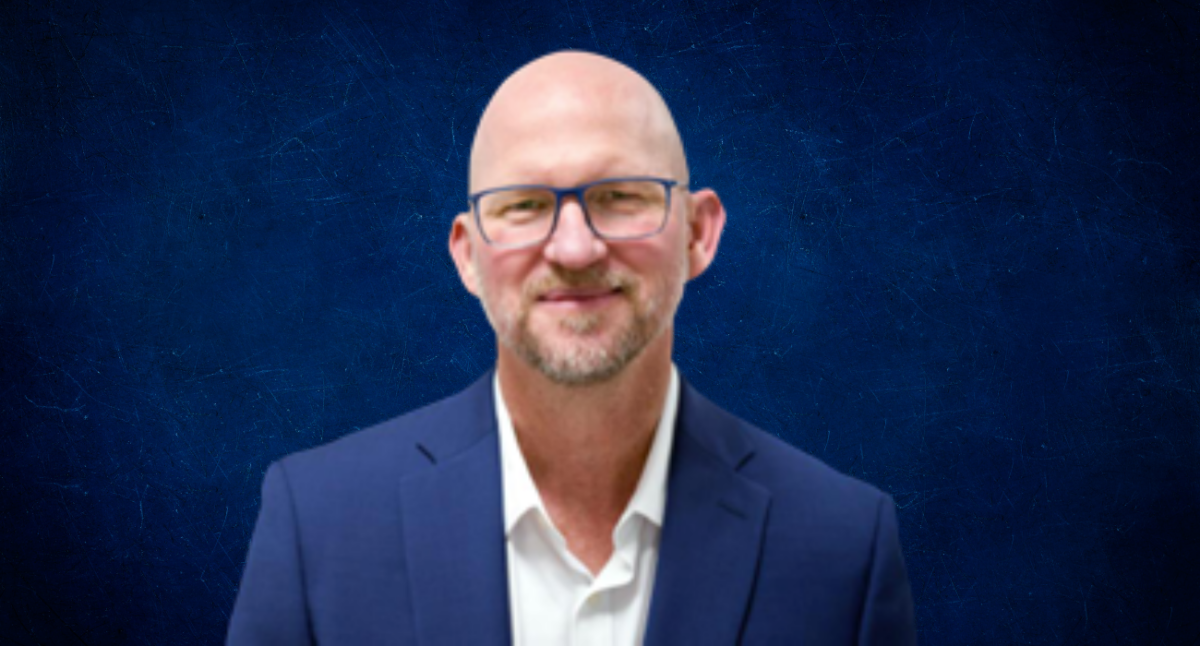
For Tim Vogel, co-founder and CEO of Scenthound, the journey into the pet industry started with a simple experience that made him curious about the bond between humans and dogs.
Today, that curiosity has evolved into a much bigger mission: helping people become better dog parents through routine hygiene, wellness, education, and technology.
But behind the business is a philosophy that reaches far beyond pet care.
For Tim, it is ultimately about connection.
It Started With a Puppy Who Followed Him
Before Scenthound, Tim was living in Washington, D.C., where he met his wife and eventually started building a family.
The sequence was almost humorous in its simplicity. They got a plant. The plant survived. Then they got a dog. The dog survived. Then they decided they were ready to have kids.
While transitioning between companies, Tim had an opportunity to take a month off. It was the perfect window to get a puppy, and he quickly became fascinated with learning everything he could about raising one.
One book introduced him to the idea of dogs as pack animals and the importance of establishing leadership. Tim followed one of its suggestions and took his puppy into a safe, wooded area.
He put the puppy down and walked away.
About 30 seconds later, he looked down.
The puppy was right on his heel.
For Tim, it was more than a training exercise. It was a moment of connection.
That experience sent him down a rabbit hole of learning about the human-animal bond and the co-evolution of humans and dogs. It also planted the first seed of an idea that would eventually shape his career.
We’ve Been Evolving Alongside Dogs for Thousands of Years
Tim’s fascination with dogs goes well beyond their role as household companions.
Humans and dogs have been evolving alongside each other for more than 10,000 years, he explains. Originally, dogs served practical functions. They protected villages, helped with hunting, herded animals, retrieved game, protected homes, controlled pests, and even pulled carts.
In many ways, dogs became employees.
But their role has changed.
Dogs moved from the woods to the field, from the field to the backyard, from the backyard into the house, and eventually, as Tim puts it, from the house to the pillow.
The modern dog is increasingly a member of the family.
And Tim believes that transformation has changed the way humans should think about caring for them.
He is particularly fascinated by how closely dogs seem to track human emotions. He points to research around dogs’ ability to detect pheromones and hormones, read facial expressions and gestures, and respond to human emotional states.
He also describes a study in which researchers monitored the heart rates of dogs and their owners and found that the dogs’ heart rates synchronized with their owners.
For Tim, this is evidence of just how extraordinary the human-dog relationship can be.
The Dog Beside You May Be Doing More Than You Think
Tim’s experience in the pet industry has also given him a front-row seat to the changing role dogs play in people’s lives.
His businesses survived both the Great Recession and the pandemic, and he noticed a significant increase in dog ownership during both periods.
Part of that, he believes, came from people’s need for companionship and emotional support during stressful periods.
Dogs can reduce stress. They can provide comfort. They can become part of a person’s everyday routine.
Tim even connects this shift to the rise of smaller breeds that can more easily accompany their owners into restaurants, shopping centers, airplanes, and other parts of daily life.
His observation is simple: people aren’t just keeping dogs at home anymore.
They are taking them everywhere.
And that growing integration between dogs and their owners has created new expectations around what it means to care for them.
The Problem Was Hiding in Plain Sight
Tim’s first business in the pet industry was mobile grooming.
Eventually, he moved into brick-and-mortar locations, where he was able to solve some of the challenges that made the mobile model difficult to scale.
But the biggest insight came during an ordinary neighborhood encounter.
Tim was walking his dog when he met a neighbor who had recently moved into the area. When the neighbor learned that Tim owned a grooming business, he said he would use it, but his dog didn’t need a groomer.
Tim looked at the dog.
He noticed that its nails were disfigured. He could smell an ear infection.
The owner simply didn’t know.
And that was Tim’s aha moment.
The issue wasn’t necessarily that dog parents didn’t care.
There was a gap between wanting to be a good dog parent and knowing what good dog care actually required.
Traditional grooming was largely associated with aesthetics and haircuts. But most dogs don’t need elaborate haircuts.
They still need basic hygiene.
That distinction became the foundation for Scenthound.
What If Dog Wellness Had a Fourth Essential?
Tim describes traditional dog care as having three major pillars:
Nutrition.
Exercise and enrichment.
Veterinary care.
But he saw another essential that was largely missing from the conversation:
Routine hygiene.
That became the idea behind Scenthound.
The name itself reflects the five areas the company focuses on:
Skin
Coat
Ears
Nails
Teeth
Rather than positioning the business simply as another grooming company, Tim wanted to create a place where dog parents could consistently take care of these foundational aspects of their dog’s wellbeing.
The company also introduced the Scent Check, which gives dog parents a report on their dog’s skin, coat, ears, nails, and teeth, along with recommendations.
The goal is not just to clean the dog.
It is to help the person understand their dog better.
Don’t Sell the New Paradigm. Meet People Where They Are.
Creating an entirely new category comes with a problem: people don’t necessarily know they need it.
Tim describes this as the “gravity” of an old paradigm.
People naturally return to what they already understand.
So instead of telling someone, “You need routine hygiene for your dog,” Scenthound starts somewhere familiar.
Come get your dog washed.
Get the nails clipped.
Get the ears cleaned.
Get the teeth brushed.
Make it fast, easy, and affordable.
Then, once the dog is there, the education begins.
The Scent Check gives the dog parent a clearer picture of what is happening with their dog. The team can explain what they are seeing, provide recommendations, and introduce the idea of regular care.
The customer journey therefore shifts from:
“I don’t want to wash my own dog.”
to:
“I want to be a great dog parent. What do I need to do?”
That is how Tim describes the process of creating a category one dog parent at a time and one location at a time.
It is also a powerful lesson for entrepreneurs building something people don’t yet know they need.
Sometimes category creation isn’t about convincing people to want something completely new.
It is about helping them recognize a need that has been sitting in front of them all along.
The Next Chapter May Be About Data
Tim’s vision for Scenthound doesn’t stop at physical locations.
One of his early insights was that the company was also a data business.
With large numbers of dogs visiting regularly, Scenthound can collect information across individual dogs over time.
Tim sees an opportunity to use that information to move from proactive care toward predictive care.
Imagine knowing a dog’s history, seeing how it changes over time, and using that information to make increasingly personalized recommendations.
Instead of asking dog parents to become experts themselves, Tim envisions a system that can help answer a much simpler question:
What is the next most powerful thing I can do for my dog?
He talks about the potential for personalized wellness recommendations, wellness indexes, longevity scores, and other tools that could help simplify the experience of being a dog parent.
In his vision, technology becomes an “easy button” for people who want to care for their dogs well without having to think about every detail themselves.
In an AI World, People Still Want Relationships
That vision makes Scenthound’s physical presence even more interesting.
While Tim is enthusiastic about artificial intelligence and proprietary data, he doesn’t see technology as a replacement for human connection.
The physical experience still matters.
A robot isn’t washing your dog.
And people still want relationships.
For Tim, the opportunity is in combining the analog and digital worlds: physical locations where people and their dogs interact with people, supported by technology and data that can make the experience increasingly personalized.
It is a distinctly modern business model built around something deeply human.
Connection first.
Technology in service of that connection.
Entrepreneurship Taught Tim to Take Some Hats Off
Building a company at this scale hasn’t always been easy for Tim personally.
He openly describes going through what he calls the “valley of despair” of entrepreneurship.
There were periods when he didn’t take care of himself well. He lost balance. He lost his health.
But as Scenthound grew, something changed.
Tim realized he didn’t need to personally carry every part of the business.
He could identify where he created the most value, then bring in people who were better equipped to handle the areas that consumed too much of his energy.
He describes this as becoming clearer about his own “superpower.”
The more mature he became as an entrepreneur, the more he learned that growth isn’t necessarily about adding more responsibilities.
Sometimes it is about removing the right ones.
His Superpower Now Is Telling the Story
Today, Tim says he is particularly focused on storytelling.
Not storytelling as a marketing gimmick, but storytelling as a leadership tool.
For him, a compelling vision can attract the right people to a mission. It can help people understand the difference they are trying to make. It can bring a group of people together around something larger than themselves.
A business coach once told him that “contribution is the cure to all anxiety.”
Tim says he believes it.
That belief has shaped the way he thinks about both leadership and Scenthound’s mission.
How do you help people find their why?
How do you help them connect that why to a mission?
And how do you get a group of people contributing toward something that makes the world a little better?
For Tim, Scenthound is one expression of that philosophy: helping people practice love every day through their relationship with their dogs.
“My Purpose in Life Is About Connection”
When Jules asks Tim to finish the sentence, “If you really knew me, you would know…” his answer brings the entire conversation into focus.
His purpose, he says, is about connection.
He is here to help people develop better connections.
That answer explains much of the journey he has shared.
The puppy that sparked his curiosity.
The human-dog bond that became his life’s work.
The business designed to help dog parents care for their animals.
The team he is building around a shared mission.
And the storytelling that helps bring people into that mission.
The business may be about dog wellness, but the philosophy underneath it is about relationships.
Believe You Have Something to Contribute
Tim’s advice to entrepreneurs is straightforward, although he admits it sounds cliché.
Believe in yourself.
You’re enough.
You’re worthy.
You’ve got something to contribute.
He says this was something he personally struggled to fully believe earlier in his journey, but that it has become easier over time.
It is a fitting lesson from someone whose business was built around recognizing a need that other people had not yet clearly articulated.
Before you can convince other people to believe in a new possibility, you have to be willing to believe that you have something worth bringing into the world.
The Quiet Practice That Keeps Him Grounded
For all the complexity of building a growing company, Tim’s daily grounding practice is remarkably simple.
Every morning, he creates 45 minutes to an hour for himself.
Sometimes that means a workout.
Sometimes it is a walk.
The specific activity matters less than creating uninterrupted space to simply be with his own thoughts.
That morning practice, he says, has helped keep him grounded.
For an entrepreneur whose days are filled with decisions, teams, growth, data, and strategy, making room for silence may be one of his most important habits.
So, What Does an Unconventional Life Look Like?
When Jules asks Tim what living an unconventional life means to him, his answer is almost disarmingly simple.
“Let’s do stuff.”
We all like comfort, he says. We are afraid of change and uncertainty.
But Tim believes the bold ones live the richest lives.
So his philosophy is not about having a perfectly mapped-out unconventional path.
It is about taking action.
Trying something.
Following curiosity.
Moving toward uncertainty instead of allowing it to make the decision for you.
Let’s go do something.
And perhaps that’s the thread that connects Tim’s entire story.
A puppy followed him into the woods.
He followed his curiosity into the pet industry.
He followed a gap in the market into a new category.
He followed the data toward a new vision for dog wellness.
And now he is following a deeper sense of purpose around connection and contribution.
That is what makes his version of an unconventional life less about breaking away from the traditional path and more about being willing to follow an idea far enough to discover where it leads.
Giveaway: A Year of Free Scenthound Services
Tim and Scenthound are giving one listener a year of free services at Scenthound, in the form of a yearlong membership.
At the time of the interview, Tim shared that Scenthound had 72 locations across the country and was opening about one location a week, with another 70 expected to open the following year.
Even if Scenthound isn’t in your neighborhood yet, Tim said, “hopefully we will be soon.”
To enter, head over to UnconventionalLifeShow.com and click on the Giveaway tab.
As Jules notes in the episode, giveaways are open for one week after the episode airs, so make sure to catch Unconventional Life every Monday so you don’t miss one.
Connect With Tim
- Scenthound: Scenthound.com
- Scenthound Franchising: ScenthoundFranchising.com
Linkedin: https://www.linkedin.com/in/timvogel/
Instagram: https://www.instagram.com/Scenthound
Facebook: https://www.facebook.com/ClubScenthound